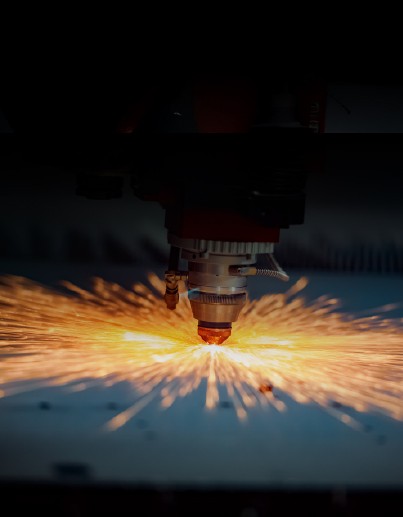
In today’s advanced industrial landscape, fluid distribution systems are becoming more compact, more powerful, and far more demanding in terms of reliability. Manifold laser welding is rapidly becoming the preferred manufacturing process for producing high-precision manifolds used in industrial cooling, energy storage, and electric vehicle thermal management systems. At the center of these systems is the manifold, a critical component responsible for distributing, collecting, and balancing fluid flow across multiple channels. A high-quality manifold laser welding process helps ensure superior weld strength, leak-tight performance, and consistent production quality.
Whether in industrial cooling equipment or new energy applications, the performance of a manifold directly affects thermal stability, system efficiency, and long-term operational safety. As requirements continue to rise, traditional manufacturing methods are increasingly unable to meet modern expectations. Laser welding technology has therefore become a key solution for next-generation manifold production.
The Role of Manifolds in Modern Engineering Systems
Industrial Equipment Cooling Systems
In industrial environments, heat management is essential to maintaining stable equipment operation. Manifolds are widely used to distribute cooling media from a main pipeline into multiple branches, ensuring that each subsystem receives consistent and balanced thermal regulation.
This uniform distribution prevents localized overheating, reduces thermal stress on components, and helps maintain continuous and stable operation of complex machinery. In large-scale industrial setups, even minor inconsistencies in fluid distribution can lead to performance degradation or system failure, making the manifold a vital structural element.
New Energy Vehicle and Energy Storage Systems
In electric vehicles, battery packs, and energy storage systems, thermal control is a key factor influencing safety, performance, and lifespan. Manifolds are commonly integrated into liquid cooling or heating circuits to manage temperature across battery modules.
By controlling the flow of coolant through multiple channels, manifolds help maintain an optimal operating temperature range under different working conditions, including high-load driving, fast charging, and extreme environmental temperatures. This ensures improved battery efficiency, reduced aging rates, and enhanced overall system safety.
Challenges of Traditional Welding in Manifold Manufacturing
Despite its widespread use, traditional welding processes face significant limitations when applied to complex manifold structures. As designs become more intricate and precision requirements increase, these challenges become more pronounced.
One of the main issues is uneven heat distribution during welding. This often leads to localized overheating, resulting in deformation, warping, or residual stress within the structure. Since manifolds typically contain multiple ports, channels, and sealing surfaces, even slight distortion can compromise assembly accuracy and sealing performance.
Another challenge is inconsistent weld quality. Manual or semi-automated welding processes can introduce variability between weld seams, affecting overall product uniformity. This inconsistency directly impacts airtightness, which is a critical requirement in fluid systems.
Additionally, traditional welding methods often result in lower production efficiency and higher rework rates. Defects such as micro-leakage, incomplete fusion, or surface imperfections require additional inspection and repair, increasing manufacturing costs and reducing throughput.
Why Laser Welding Is Transforming Manifold Manufacturing
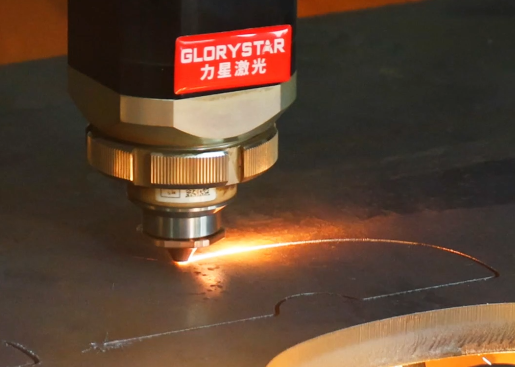
Laser welding offers a fundamentally different approach to metal joining. Instead of relying on broad heat input, it uses a highly concentrated energy beam to achieve precise and controlled fusion of materials.
This results in several important advantages for manifold production.
First, the heat-affected zone is significantly reduced. Because energy input is highly localized, surrounding material remains largely unaffected, minimizing deformation and preserving dimensional accuracy. This is particularly important for manifolds with tight tolerances and complex geometries.
Second, laser welding delivers exceptional process stability. Once parameters are set, the system can reproduce consistent welds with minimal variation, improving overall product uniformity and reducing dependence on operator skill.
Third, it supports complex structural designs. Laser beams can access narrow or intricate areas that are difficult for traditional tools to reach, making it ideal for multi-port manifolds with complex internal flow paths.Finally, laser welding is highly compatible with automation systems, enabling continuous production, reduced labor dependency, and improved manufacturing efficiency.
Key Advantages of Laser-Welded Manifolds
Compared to conventional welding methods, laser-welded manifolds demonstrate significant improvements across multiple performance indicators.
The weld strength is higher due to deep penetration and controlled fusion characteristics. In many applications, the depth-to-width ratio of the weld can reach up to 10:1, allowing for strong and durable joints even in compact structures.
Sealing performance is also greatly enhanced. With precise energy control and minimal defects, laser-welded joints achieve extremely high airtightness reliability. In many production cases, the pass rate of leakage testing can approach near-perfect levels.
Dimensional stability is another major benefit. Reduced thermal distortion ensures that the final product maintains its designed geometry, which is crucial for assembly accuracy and system integration.
In addition, production efficiency is improved. Laser welding can be integrated into automated systems, significantly reducing cycle times compared to traditional processes. This leads to higher output and more consistent product quality.
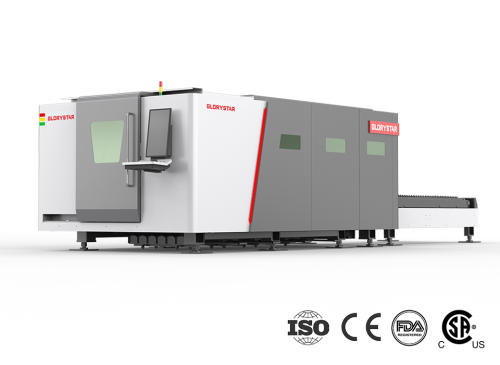
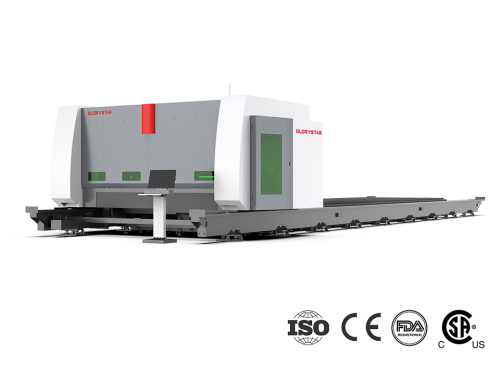
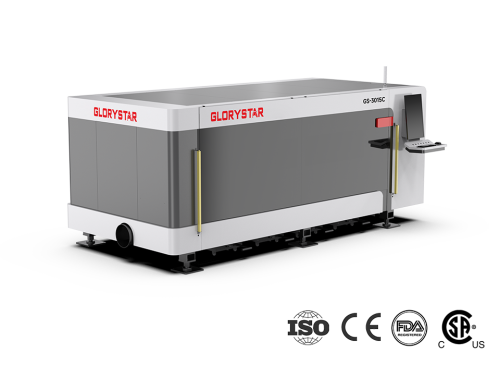
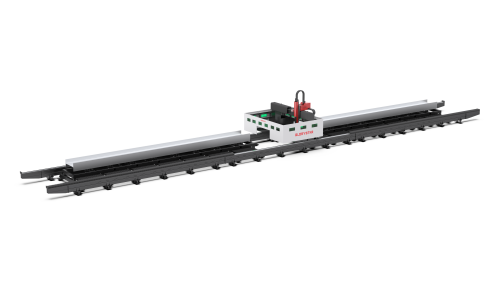
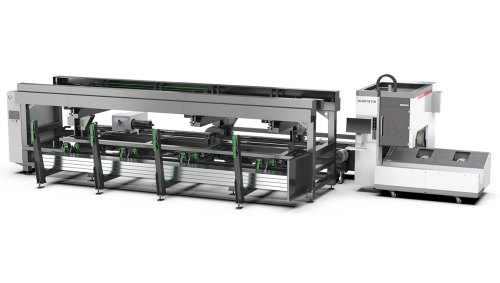
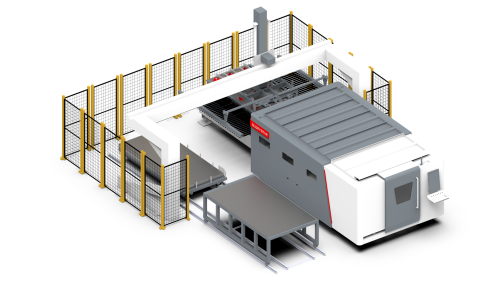
Gantry-Type Laser Welding System for Manifold Manufacturing
Among various laser welding configurations, gantry-type systems are particularly suitable for large-scale or high-precision manifold production. These systems provide a stable and flexible platform for handling complex structures.
A major advantage of this setup is its ability to achieve high-precision positioning, often reaching micron-level accuracy. This ensures that each weld is placed exactly according to design specifications, even in multi-port or irregular geometries.
The system is capable of full-range access, enabling 360-degree welding coverage for complex flow channel structures. This eliminates blind spots and ensures complete weld coverage across the entire manifold.
In terms of performance, gantry laser welding systems can achieve a weld depth-to-width ratio of up to 10:1, providing strong structural integrity while maintaining compact design flexibility.
From a production perspective, these systems significantly improve efficiency. Compared with traditional welding processes, overall throughput can increase by approximately 20 percent or more, depending on the application and material type.
Most importantly, they deliver extremely high sealing reliability. In many industrial applications, airtightness testing pass rates can reach nearly 100 percent, greatly reducing inspection and rework costs.
Another key benefit is versatility. These systems can handle different materials, including stainless steel, aluminum alloys, and other commonly used metals in thermal management systems. They are also adaptable to various sizes and structural configurations, making them suitable for both standardized mass production and customized manufacturing requirements.
Expanding Applications Across Industries
Laser-welded manifolds are increasingly being adopted across multiple industries beyond traditional cooling systems.
In data centers, they are used in liquid cooling infrastructures that support high-performance computing equipment. As computing density increases, efficient heat removal becomes critical, and manifolds play a central role in ensuring system stability.
In renewable energy storage systems, they are essential for thermal regulation of battery clusters, helping maintain safe and efficient energy storage conditions.
In industrial automation and heavy machinery, they support continuous operation under high thermal loads, ensuring equipment reliability in demanding environments.
This broad applicability highlights the importance of advanced welding technologies in enabling next-generation fluid management systems.
Conclusion
As industrial systems continue to demand higher power density, greater integration, and stricter reliability standards, manufacturers are transforming the way they produce manifolds. Although traditional welding methods remain common, they often struggle with deformation control, weld consistency, and production efficiency.
Laser welding overcomes these challenges through precise energy delivery, seamless automation integration, and outstanding structural performance. Manufacturers can achieve stronger welds, better sealing performance, higher dimensional accuracy, and greater productivity, making manifold laser welding an increasingly popular choice for high-performance manifold manufacturing.
As fluid distribution systems become more advanced, manufacturers must focus not only on innovative designs but also on the quality of the welding process itself. Manifold laser welding will continue to drive this evolution by helping industries build safer, more efficient, and more reliable thermal management systems.