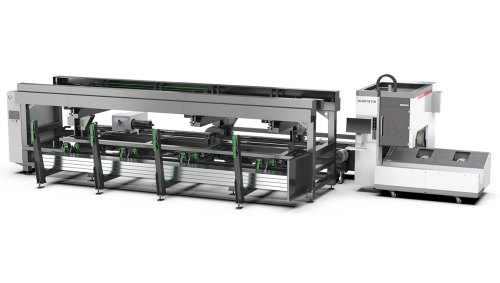
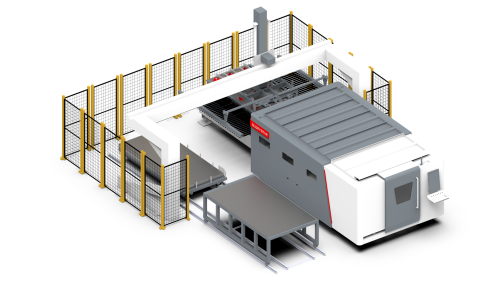
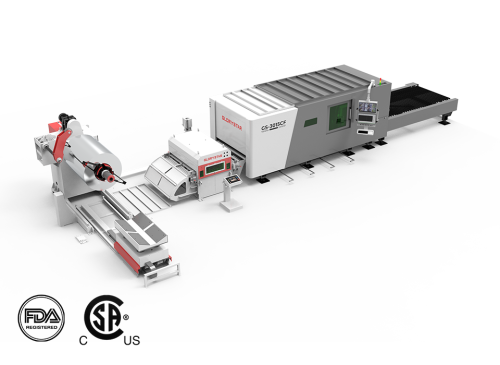
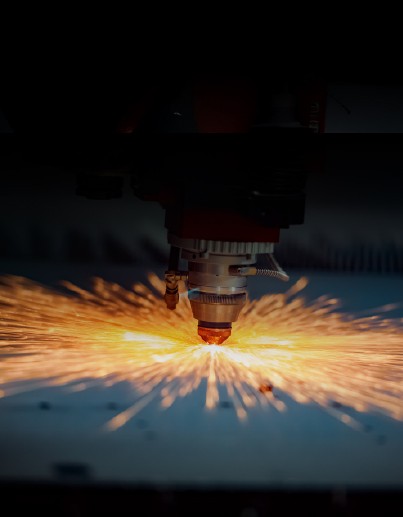
With the rapid growth of AI servers, data centers, electric vehicles, energy storage systems, and other high-performance equipment, liquid cooling has become increasingly important for thermal management. Liquid cooling plates, manifolds, pipes, and other components require precise and reliable welding to achieve strong joints and stable sealing. A liquid cooling welding machine provides the precision, consistency, and efficiency needed to meet these demanding manufacturing requirements.
Choosing the right liquid cooling welding machine is therefore an important decision for manufacturers. The machine should match the material, component design, production volume, welding requirements, and automation level rather than being selected based only on laser power or price.
What Is a Liquid Cooling Welding Machine?
A liquid cooling welding machine is a laser welding system designed for manufacturing liquid cooling components, including liquid cooling plates, manifolds, pipes, fittings, and other thermal management parts.
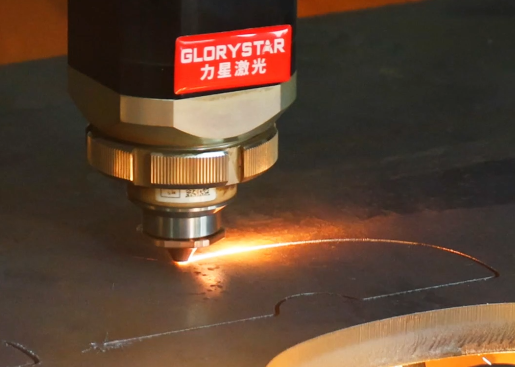
Laser welding provides a concentrated heat source, precise energy control, and high repeatability. These advantages make it suitable for applications where welding quality, leak tightness, and dimensional consistency are critical.
However, different liquid cooling components require different welding configurations. Manufacturers should evaluate their actual production requirements before choosing equipment.
6 Factors to Consider Before Buying
1. Laser Power
Laser power should be selected according to the material, thickness, joint design, required penetration, and welding speed.
Higher power does not always mean better results. Excessive heat input can increase deformation, while insufficient power may cause incomplete penetration. Welding tests with actual materials and workpieces are recommended before finalizing the machine configuration.
2. Welding Material
Material properties have a direct effect on laser welding performance.
Aluminum is widely used for liquid cooling plates because of its lightweight structure and high thermal conductivity. Stainless steel is commonly used for manifolds, pipes, and fittings, while copper may be selected for applications requiring excellent thermal conductivity.
Different materials may require different laser power, welding speeds, shielding gas, and process parameters. The liquid cooling welding machine should therefore be configured for the specific materials being welded.
3. Workpiece Size and Welding Area
The machine should accommodate not only the overall workpiece size but also the welding area, welding path, fixture, and component positioning requirements.
A stable fixture is particularly important for liquid cooling components. Poor positioning or excessive joint gaps can result in inconsistent welds and increase the risk of leakage.
4. Welding Speed
Welding speed directly affects production capacity, but manufacturers should consider the complete production cycle rather than welding speed alone.
A typical cycle may include:
Loading → Positioning → Clamping → Welding → Inspection → Unloading
Reducing the total cycle time can significantly improve production efficiency, especially in mass production.
5. Automation Level
The appropriate automation level depends on production volume and product variety.
Manual welding may be suitable for prototypes and small batches. Semi-automated systems can provide a balance between flexibility and efficiency, while fully automated solutions are more suitable for high-volume production.
Automated loading, positioning, vision systems, welding monitoring, and material handling can reduce manual operations and improve welding consistency.
6. Production Volume
Production volume should be considered before purchasing equipment.
For low-volume production, flexibility may be more important than automation. For mass production, manufacturers should focus on cycle time, repeatability, labor requirements, and overall equipment efficiency.
A high-volume manufacturer may benefit from an automated liquid cooling welding machine that can maintain stable welding quality over long production cycles.
How to Choose the Right Welding Accuracy
Welding accuracy is not determined by the laser source alone. Manufacturers should also consider positioning accuracy, repeatability, fixture precision, motion system performance, and welding seam consistency.
For liquid cooling components, stable positioning is especially important because variations in joint alignment can affect penetration and sealing performance.
Before purchasing equipment, manufacturers should evaluate actual welding samples rather than relying only on equipment specifications.
What Quality Inspection Functions Are Important?
For liquid cooling components, a good-looking weld is not enough. Weld integrity and leak tightness are essential to prevent coolant leakage during operation.
Important quality considerations include:
Weld penetration
Surface appearance
Porosity and cracks
Welding deformation
Leak tightness
Process consistency
Vision inspection and welding process monitoring can also help identify abnormal conditions and improve production stability. Downstream leak testing should be considered as part of the overall quality control process.
How to Calculate the ROI
The initial equipment price is only one part of the total investment. A more efficient liquid cooling welding machine can reduce labor costs, production time, scrap, and rework.
A simple ROI calculation is:
ROI = (Annual Savings − Investment Cost) / Investment Cost × 100%
Manufacturers should consider labor savings, production output, cycle time, defect rates, and maintenance costs when evaluating the long-term value of a welding system.
Liquid Cooling Welding Machine Buying Checklist
Before purchasing equipment, consider the following:
Welding material and thickness
Required welding penetration
Workpiece dimensions and welding area
Target welding speed
Expected daily production volume
Suitable automation level for your production needs
Required positioning accuracy and repeatability
The need for vision inspection
Leak tightness testing requirements
Expected return on investment (ROI)
Conclusion
Choosing the right liquid cooling welding machine requires evaluating the complete production process, including material, workpiece design, welding speed, accuracy, automation, and quality requirements.
For manufacturers producing liquid cooling plates, manifolds, and other thermal management components, the right welding system can provide stable welding quality, reliable sealing, and higher production efficiency. Evaluating actual production requirements before purchasing equipment can help manufacturers select a solution that supports both current needs and future mass production.