For many metal fabricators, reducing labor costs is an important reason to invest in a fiber laser cutting machine. A modern laser can significantly improve cutting efficiency, but faster cutting alone does not always lead to lower labor requirements. If operators still spend most of their time loading materials, monitoring production, unloading parts, and sorting finished components, labor may simply be moving from one task to another.
This is why businesses evaluating laser cutting labor costs need to look at the entire production process. The right laser cutting machine should not only cut metal quickly but also help operators work more efficiently and support higher production output.
Cutting Speed Is Only One Part of Labor Efficiency
A high-speed laser cutting machine can shorten the actual cutting cycle, but cutting is only one part of the production process.
A typical workflow may include material preparation, loading, cutting, unloading, part sorting, scrap handling, and transportation to the next process. If most of these steps remain manual, the reduction in total labor may be smaller than expected.
For manufacturers, the more useful question is not simply, "How fast can the laser cut?" It is:
How much operator time is required to produce each finished part?
This broader perspective provides a more realistic way to evaluate laser cutting labor costs and the potential return from new equipment.
Where Manual Labor Can Limit Production
Manual material handling is often overlooked when manufacturers calculate production efficiency.
An operator may spend only a few minutes loading a sheet or removing finished parts, but these tasks are repeated throughout the day. Across hundreds of production cycles, handling time can become a significant part of total labor.
The situation becomes even more noticeable when production volume increases. A faster machine may produce more parts, but if one operator must continuously handle those parts, the additional cutting capacity can also increase the operator's workload.
This means that improving production efficiency requires more than increasing laser power or cutting speed. Machine design, operating convenience, automation, and overall workflow all matter.
What Should a More Efficient Laser Cutting Machine Do?
A productive laser cutting machine should help reduce unnecessary manual involvement while maintaining consistent cutting performance.
For example, a well-designed system can help operators spend less time on repetitive machine-related tasks and more time managing production, quality inspection, material preparation, or other valuable work.
This is where the difference between machine speed and production efficiency becomes important.
A machine that cuts quickly but requires constant operator attention may not deliver the same labor advantage as a machine designed around efficient production.
For manufacturers looking to control laser cutting labor costs, the better investment is equipment that combines cutting performance with practical production efficiency.
Glorystar Laser: Designed for More Efficient Production
This is one of the areas where Glorystar Laser places strong emphasis on machine development.
With more than 20 years of experience in laser equipment manufacturing, Glorystar focuses on developing fiber laser cutting machines that help manufacturers improve productivity while making better use of their workforce.
Glorystar's laser cutting machines combine high-performance laser sources, precision motion systems, intelligent control, and production-oriented machine structures. These features are designed to provide fast and consistent cutting while making daily operation more efficient.
For manufacturers, this means the value of the machine is not limited to its maximum cutting speed. The goal is to create a more productive working environment in which operators can manage production efficiently without being occupied by unnecessary repetitive tasks.
When Automation Can Make a Real Difference
Automation becomes particularly valuable when manual handling starts limiting production.
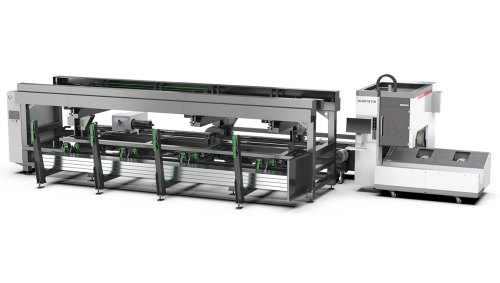
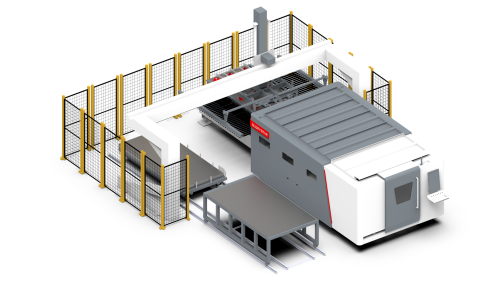
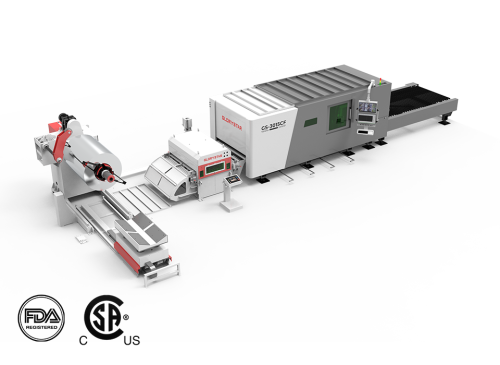
For manufacturers with higher production volumes, automated loading and unloading can reduce repetitive material-handling work and help keep the cutting process moving. Instead of requiring operators to spend their working day performing the same loading and unloading tasks, the production system can handle more of the material movement while operators focus on broader production responsibilities.
Glorystar offers laser cutting solutions with automation options designed for different production requirements. This allows manufacturers to consider not only how quickly a machine can cut but also how efficiently the complete production process can operate.
The right level of automation depends on factors such as production volume, material size, job frequency, and available labor. It is not about adding automation simply for the sake of adding technology. It is about using the right equipment configuration to solve a real production problem.
Measure Labor Per Part, Not Just Labor Per Machine
When comparing laser cutting machines, manufacturers should look beyond the number of operators assigned to a machine.
A more meaningful measurement is the amount of labor required to produce each part.
Consider the complete process:
Loading + Cutting + Unloading + Sorting + Handling + Changeover
Reducing one of these steps can improve productivity, but reducing several sources of manual work can have a much greater effect on overall laser cutting labor costs.
This is why machine configuration matters. A production-oriented laser cutting solution should be evaluated according to how it performs in the customer's actual workflow, not simply according to a specification sheet.
A Better Approach to Reducing Laser Cutting Labor Costs
The goal of modern laser cutting technology is not simply to replace operators. It is to help each operator support more productive work.
A high-performance machine can provide faster processing. Intelligent controls can make operation more convenient. Reliable machine construction can support consistent production. Automation options can reduce repetitive material handling. Together, these capabilities can create a more efficient manufacturing process.
Glorystar Laser brings these considerations together in its fiber laser cutting solutions, helping manufacturers move beyond simply purchasing a faster cutting machine and toward building a more productive cutting operation.
For businesses looking to control laser cutting labor costs, the right machine should deliver more than impressive cutting speed. It should help reduce unnecessary manual work, improve operator productivity, and support consistent output as production demands grow.
That is the value of choosing a laser cutting solution designed around the entire production process—not just the cutting itself.