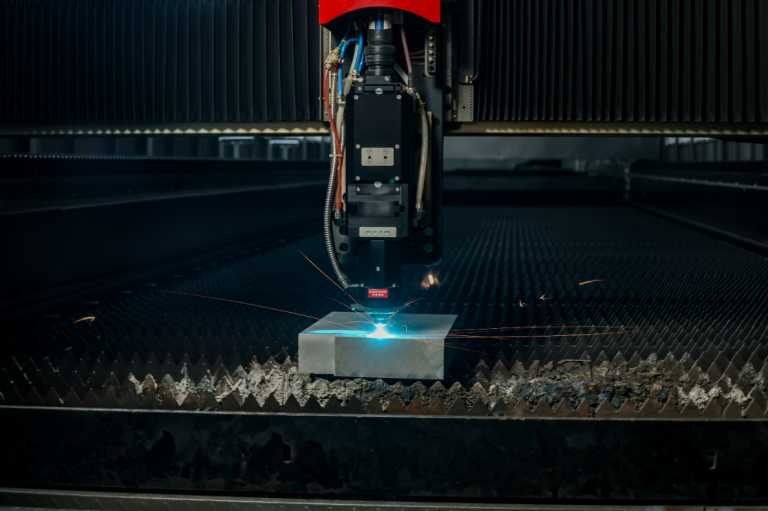
Thick Plate Laser Cutting Is a Daily Challenge in Shipbuilding
In modern shipbuilding fabrication, thick plate laser cutting is a routine but critical operation. Across U.S. shipyards and marine fabrication facilities, carbon steel and stainless steel plates ranging from 8 mm to over 25 mm are widely processed using laser cutting for hull structures, decks, bulkheads, stiffeners, and load-bearing components.
While many cutting technologies are capable of processing these materials, maintaining consistent cut quality remains a persistent challenge. As U.S. shipyards face tighter delivery schedules, higher quality standards, and increasing labor constraints, thick plate laser cutting has become an increasingly important topic in marine fabrication. The challenge today is no longer whether thick plates can be cut, but whether they can be cut the same way, every time, across long production cycles and changing operating conditions.
Why Cut Quality Consistency Matters in Marine Fabrication
In shipyard production, cutting defines the dimensional foundation of every downstream process. When cut quality varies, even slightly, the effects propagate throughout the entire fabrication line and compound over time.
Common Downstream Problems Caused by Inconsistent Cutting
Rough or uneven cut edges that require additional grinding and finishing
Increased preparation time before welding, especially on thick joints
Fit-up inaccuracies during assembly of large structures
Higher rework rates, material waste, and inspection failures
In marine fabrication environments where projects involve massive steel structures and long production timelines, these inefficiencies reduce productivity and introduce uncertainty into both scheduling and labor planning—two areas U.S. shipyards are under growing pressure to control.
The Limitations of Traditional Cutting Methods for Thick Steel Plates
Plasma cutting and oxy-fuel cutting have long been established methods for cutting thick steel plates in shipbuilding. While they remain useful for certain applications, they also present inherent limitations when consistency and repeatability are required.
Why Traditional Methods Struggle With Consistency
Wider heat-affected zones (HAZ) increase the risk of thermal distortion in thick plates
Edge quality varies with plate condition, torch wear, and operator technique
Operator-dependent parameter adjustments reduce repeatability across shifts
Over extended production runs or multi-shift operations, maintaining uniform cut quality becomes increasingly difficult. As shipyard production scales up, these variations turn cutting into a variable process rather than a controlled one.
How Fiber Laser Cutting Improves Stability on Thick Plates
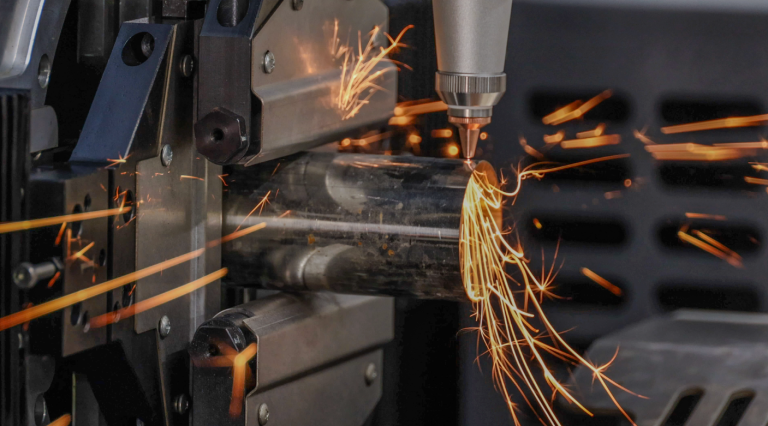
Fiber laser cutting introduces a higher level of control and repeatability to thick plate processing. With precise CNC motion systems and digitally controlled cutting parameters, laser cutting systems are designed to deliver stable results across long operating hours.
Key Stability Advantages of Fiber Laser Cutting
Narrower heat-affected zones reduce thermal stress and plate deformation
Cleaner cut edges minimize secondary finishing and grinding work
Consistent kerf width improves dimensional accuracy and fit-up
Repeatable cutting parameters reduce dependence on individual operators
These advantages directly support laser cutting stability in demanding marine fabrication environments where consistency is critical.
Stability Under Real Shipyard Operating Conditions
Unlike short test runs or demonstration cuts, real shipyard production involves long hours of continuous cutting, varying plate thicknesses, and frequent material changes. Stability under these conditions is what separates laboratory performance from real-world reliability.
For thick plate laser cutting, this means maintaining:
Consistent cut quality over extended shifts
Stable cutting performance across different material batches
Reliable operation during high-duty production schedules
A stable cutting process allows shipyards to maintain production momentum without frequent adjustments or unplanned downtime.
Why Stability Matters More Than Peak Speed in Shipyard Production
Peak cutting speed is often highlighted when comparing cutting technologies. However, in real shipyard environments, maximum speed on a single plate rarely reflects overall productivity.
Stability as a Production Multiplier
Stable cutting performance enables faster welding preparation, more accurate assembly, reduced rework, and smoother handoffs between production stages. Over the course of a project, these improvements often outweigh any gains achieved by marginally higher cutting speeds.
For thick plate fabrication, stability transforms cutting from a potential bottleneck into a reliable foundation for the entire production workflow.
Thick Plate Laser Cutting as a Foundation for Production Predictability
Production predictability is becoming a key competitive factor in U.S. shipyards. Unplanned delays at early fabrication stages create cascading effects that disrupt welding, assembly, and final integration.
How Cutting Consistency Supports Predictable Output
By stabilizing the cutting stage, shipyards can reduce variability in downstream processes, improve coordination between cutting, welding, and assembly teams, and maintain clearer visibility into project timelines.
In this context, thick plate laser cutting supports not only part quality, but overall production predictability.
Practical Evaluation Points for Shipyard Buyers and Engineers
Evaluating cutting equipment requires looking beyond headline specifications. In real marine fabrication environments, long-term stability, uptime, and ease of integration are often more valuable than maximum rated power.
What Shipyards Should Evaluate in Thick Plate Laser Cutting Systems
Cut quality consistency over extended production runs
Stability when processing thick carbon steel and stainless steel plates
Ease of parameter management across different shifts
Maintenance predictability, service accessibility, and uptime
This evaluation approach helps align equipment investment with long-term operational goals rather than short-term performance metrics.
Rethinking Cut Quality as a Strategic Decision
Cut quality should not be treated as an isolated technical metric. In shipbuilding fabrication, it directly influences labor efficiency, material utilization, inspection outcomes, and delivery reliability.
As U.S. shipyards continue to modernize their production processes, many are reassessing how cutting stability fits into their broader manufacturing strategy. Improving consistency at the cutting stage often delivers benefits far beyond the cutting table itself.
Final Thoughts
Inconsistent cut quality remains a hidden cost in shipbuilding. While it may not always be immediately visible, its impact is felt throughout the production line. By prioritizing stability—especially in thick plate applications—shipyards can reduce rework, improve efficiency, and build more predictable production environments.
For shipyards focused on long-term competitiveness, thick plate laser cutting stability is becoming an essential component of modern shipyard production strategy.