For many US fabrication shops, investing in an automated laser cutting system is no longer simply about increasing cutting speed — it is about solving labor constraints, improving machine utilization, and maintaining predictable output. As operator wages rise and skilled labor becomes harder to retain, shop owners are reconsidering whether manual loading still makes financial sense in 2026.
The Labor Reality in Today’ s Fabrication Market
Across the United States, fabrication businesses face two consistent challenges:
Rising hourly wages
Difficulty hiring and retaining experienced operators
Even well-equipped shops often struggle to expand production because they cannot easily add reliable manpower.
In this environment, machine capability is rarely the bottleneck. Most modern fiber lasers can cut faster than material can be manually loaded and unloaded.
The real limitation is workflow interruption.
Manual Loading: The Hidden Downtime
In many mid-sized shops:
30–40 sheets are processed daily
Each manual sheet exchange takes 2–4 minutes
That equals 1.5–2.5 hours of non-cutting time per day
Over the course of a year, this lost production time becomes substantial.
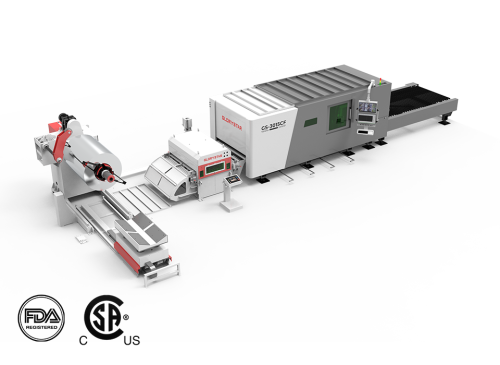
An automated laser cutting system dramatically reduces sheet exchange time and keeps the machine operating at a more consistent rhythm. Instead of waiting for operators to reposition material, production transitions happen quickly and predictably.
This improves not just speed — but stability.
ROI: Does Automation Actually Pay Off?
For US buyers, every capital investment must make financial sense.
Consider a practical example:
One laser system supported by two operators
Average labor cost per operator: approximately $60,000 annually
Total labor expense: around $120,000 per year
If automation reduces overtime or allows one operator to manage multiple processes, annual savings can become significant.
Upgrading to an automated laser cutting system may add $80,000–$150,000 to the initial investment, depending on configuration. In many cases, the return period falls within 18–30 months.
However, payroll reduction is only part of the equation.
Automation also improves:
Machine utilization rate
Production planning accuracy
On-time delivery consistency
Operator safety
These factors directly impact long-term profitability and customer retention.
Is Automation Only for High-Volume Production?
Some shop owners assume automation is only necessary for large factories running 24/7.
In reality, even single-shift operations can benefit from an automated laser cutting system.
Reasons include:
Faster material transitions
Reduced operator fatigue
Fewer scheduling disruptions
More predictable daily output
Automation is not solely about lights-out manufacturing. It is about minimizing variability in everyday production.
For shops processing stainless steel, carbon steel, or aluminum in mixed batches, consistent sheet handling reduces delays and keeps jobs moving smoothly.
Choosing the Right Level of Automation
Automation should match production scale — not exceed it.
Most growing fabrication shops consider three levels:
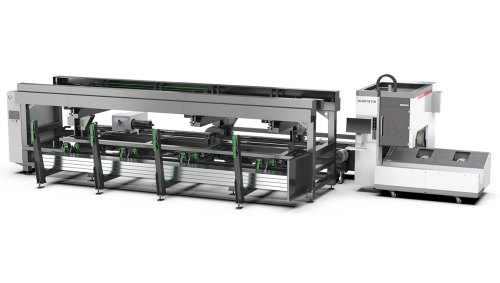
1. Automatic Loading and Unloading Units
Ideal for reducing sheet change time without major facility changes.
2. Modular Tower Storage Systems
Allow organized material staging and semi-automated flow.
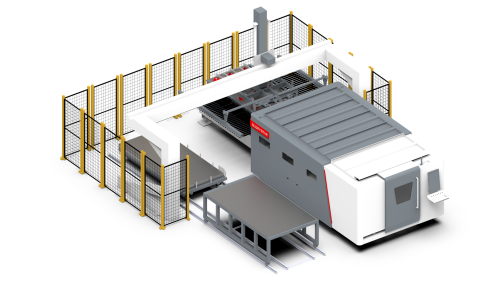
3. Integrated Flexible Automation Cells
Designed for higher output environments requiring extended unmanned operation.
A scalable automated laser cutting system should allow phased upgrades. Shops can begin with automatic loading and later integrate tower storage or expanded automation as production demand increases.
A Practical Automation Path for Growing Shops
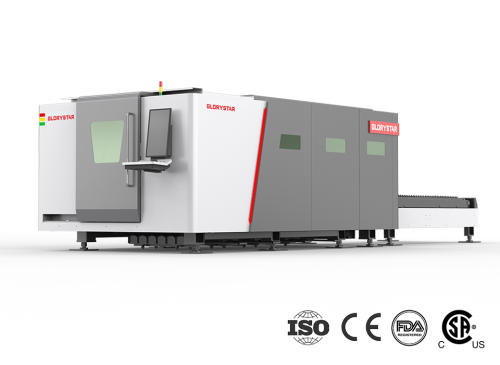
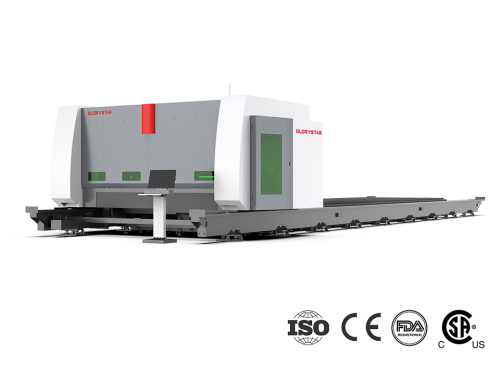
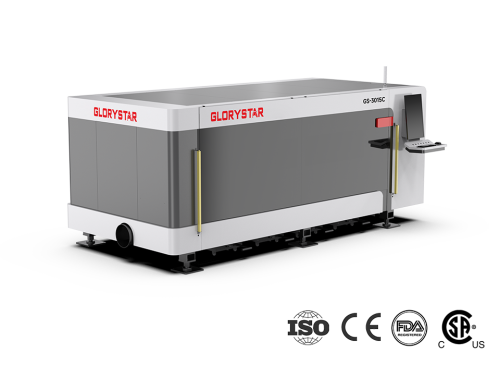
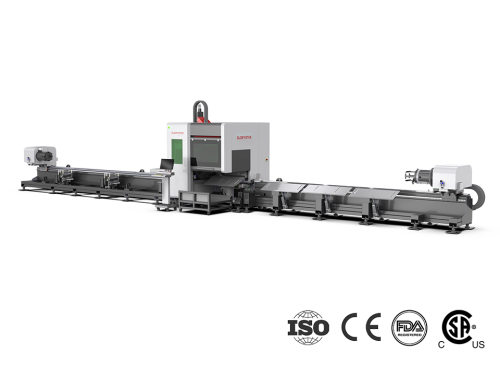
Modern fiber laser platforms, including those offered by Glorystar, are designed with automation compatibility in mind. Rather than forcing full automation from the beginning, manufacturers can start with a base cutting system and integrate automatic loading modules when production volume justifies it.
This modular approach offers several advantages:
Controlled initial investment
Easier floor layout adaptation
Future expansion capability
Improved production stability
An intelligently configured automated laser cutting system supports growth without creating unnecessary financial strain.
Automation as Operational Stability
In 2026, the automation discussion is shifting from speed to predictability.
Most fiber lasers already provide sufficient cutting performance. The greater challenge is ensuring consistent throughput regardless of staffing fluctuations or peak demand.
An automated laser cutting system reduces dependency on manual timing and improves daily operational rhythm. Machines operate closer to their designed capacity, which enhances overall efficiency.
For fabrication businesses aiming to scale responsibly, automation is increasingly viewed as a stability strategy rather than a luxury upgrade.
Final Thoughts
Not every shop requires full automation immediately. Low-volume operations may continue running successfully with manual workflows.
However, for growing US fabrication businesses facing labor pressure and tighter delivery expectations, manual-only processes are becoming harder to justify.
An automated laser cutting system provides more than efficiency — it delivers consistency, predictability, and long-term cost control.
And in today’s competitive fabrication market, stability is often the most valuable advantage of all.