Introduction
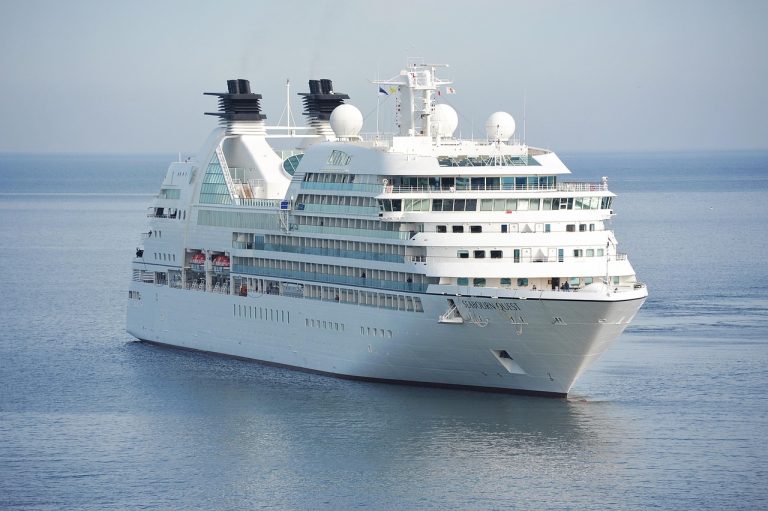
Shipbuilding has always been a balance between scale and precision. As vessel designs become more complex and delivery timelines tighter, shipyards are under growing pressure to improve production efficiency without compromising structural quality. In this context, a laser cutting system for shipbuilding plays an increasingly important role in meeting tighter tolerances, ensuring structural integrity, and maintaining consistent quality across thousands of individual components.
In this context, adopting a laser cutting system for shipbuilding is no longer just a technological upgrade. It is a strategic decision that directly affects material utilization, welding efficiency, production scheduling, and long-term operational stability. For many shipyards, laser cutting has become a foundational process that supports downstream assembly and welding performance.
Why Shipyards Are Rethinking Steel Cutting Processes
Traditional cutting methods such as flame cutting and plasma cutting remain widely used in shipbuilding due to their familiarity and relatively low initial investment. However, as shipyard workloads increase and vessel structures become more complex, these methods often struggle to meet today’s requirements for accuracy and repeatability.
Common challenges include:
Inconsistent edge quality on thick steel plates
Excessive heat-affected zones that complicate welding
Additional grinding and rework before assembly
Higher dependency on skilled manual labor
These issues may seem manageable on individual components, but across large hull sections and long production cycles, they significantly increase labor hours and slow down project timelines. As production volumes grow, such inefficiencies accumulate and begin to limit overall shipyard productivity and cost control.
What Defines a Laser Cutting System for Shipbuilding
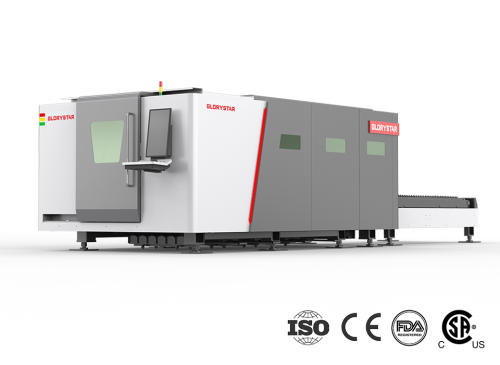
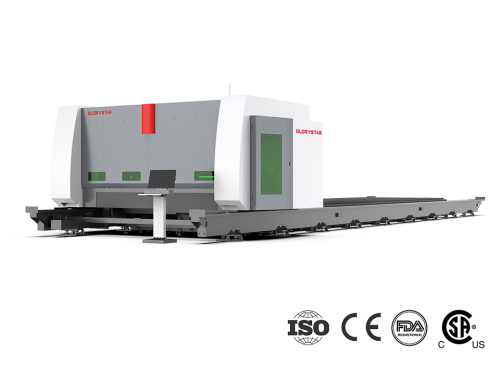
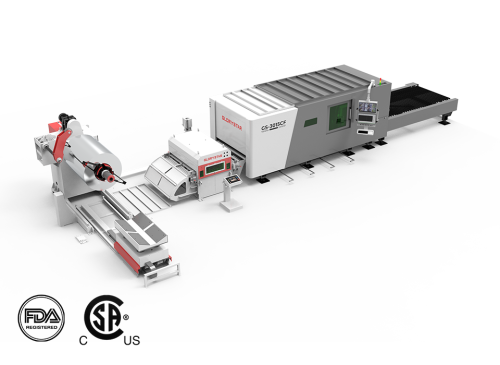
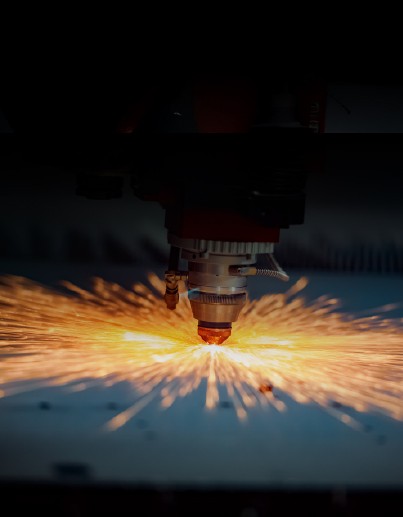
A modern laser cutting system for shipbuilding is designed specifically to handle large-format steel plates and demanding industrial environments. Unlike lighter fabrication applications, shipbuilding requires stable performance over long operating hours and consistent results on thick structural steel.
Key system characteristics typically include:
High-power fiber laser sources suitable for thick plate cutting
Rigid machine structures to maintain long-term accuracy
CNC control systems for repeatable and stable operation
Software that supports optimized nesting and production planning
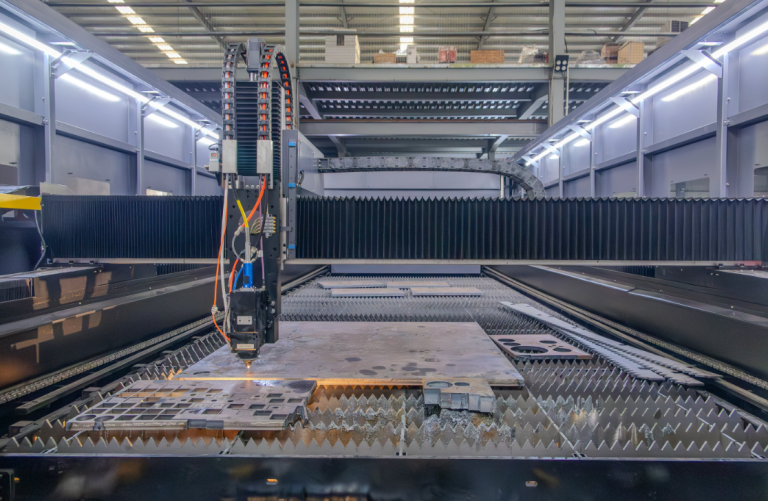
By combining precise motion control with high-energy laser sources, laser cutting systems deliver consistent results across different steel grades and plate thicknesses. This consistency is essential for maintaining predictable fabrication quality throughout large-scale vessel construction.
Precision Cutting and Its Impact on Welding Performance
In shipbuilding, cutting quality has a direct influence on welding efficiency and structural performance. Poorly cut components often lead to misalignment, excessive gaps, and longer welding cycles, increasing both labor costs and the risk of distortion.
With fiber laser cutting for shipyards:
Cut edges are smoother and more uniform
Dimensional tolerances are easier to control
Fit-up accuracy improves during assembly
Welding time and distortion are reduced
As a result, shipyards often experience productivity gains not only in cutting operations, but across the entire fabrication and assembly process. Improved cut accuracy also helps standardize welding quality, which is critical for meeting classification and inspection requirements.
Improving Material Utilization and Cost Control
Steel represents a significant portion of vessel manufacturing costs, especially in large commercial and industrial ships. A laser cutting system for shipbuilding helps optimize material usage through precise cutting and efficient nesting strategies.
Key benefits include:
Narrow kerf widths that minimize waste
Precise nesting to maximize plate utilization
Reduced scrap generation during cutting
Over long production cycles, even small improvements in material efficiency can translate into substantial cost savings. Better material utilization also supports more accurate cost forecasting and reduces the variability often associated with traditional cutting methods.
Automation and Scalability in Modern Shipyards
Labor shortages and rising training costs are pushing shipyards toward higher levels of automation. Industrial laser cutting systems are well suited for this transition due to their compatibility with automated material handling and digital production systems.
Many systems can be integrated with:
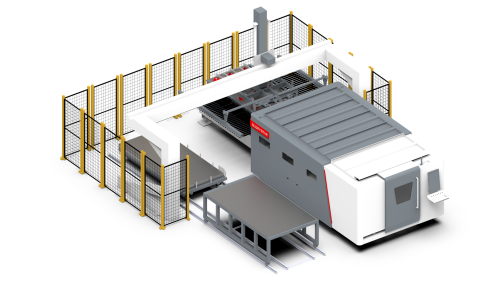
Automatic loading and unloading units
Production management and scheduling software
Future laser power upgrades as cutting demands increase
This scalability allows shipyards to expand capacity without disrupting existing production lines. As vessel designs evolve and steel thickness requirements change, laser cutting systems can be adapted to support new fabrication challenges.
How Glorystar Laser Systems Support Shipbuilding Applications
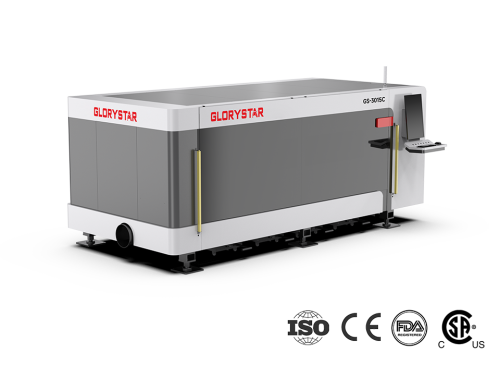
Glorystar develops industrial laser cutting systems with a strong focus on stability, durability, and real-world manufacturing conditions. For shipbuilding applications, Glorystar equipment emphasizes long-term reliability rather than short-term performance metrics.
Key features include:
Reliable performance when cutting thick steel plates
Heavy-duty machine frames designed for continuous operation
CNC systems optimized for industrial environments
Optional automation solutions to reduce manual handling
Key Factors to Consider Before Investing
Before selecting a laser cutting system for shipbuilding, manufacturers should evaluate several practical factors to ensure long-term success.
Key considerations include:
Maximum and average steel plate thickness
Daily cutting volume and production rhythm
Integration with welding and assembly processes
Long-term service and technical support availability
Choosing the right system means planning not only for current projects, but also for future vessel designs and evolving market demands.
Conclusion
As shipbuilding continues to evolve, precision and process efficiency are becoming decisive competitive factors. A well-configured laser cutting system for shipbuilding enables shipyards to improve cut quality, streamline welding operations, and reduce overall production costs.
For manufacturers focused on long-term growth and operational stability, laser cutting is no longer optional. It has become an essential foundation of modern shipyard fabrication.