As manufacturers demand higher productivity, better weld quality, and more consistent production, Laser Welding Solutions are becoming increasingly important for modern manufacturing. Traditional welding methods are facing growing challenges, including heat distortion, inconsistent welds, post-welding finishing, and limited automation, all of which can affect production efficiency and product reliability.
Laser Welding Solutions provide a precise and flexible approach to modern metal manufacturing. By using a focused laser beam to create controlled and concentrated heat, laser welding can produce strong, clean, and highly repeatable welds with low heat input.
From battery components and liquid cooling systems to automotive parts and precision metal components, laser welding can be adapted to a wide range of industrial applications.
What Are Laser Welding Solutions?
Laser Welding Solutions combine laser welding equipment, welding technology, fixtures, control systems, and automation according to the specific requirements of a manufacturing process.
Instead of simply selecting a laser welding machine, manufacturers can develop a complete solution based on factors such as:
Material type
Material thickness
Joint design
Welding speed
Weld strength
Sealing requirements
Production volume
Automation requirements
This approach allows manufacturers to select the appropriate laser source, welding head, worktable, fixture, motion system, and control configuration for their application.
For manufacturers with demanding production requirements, a customized solution can provide better consistency and efficiency than using a standard welding setup.
Why Choose Laser Welding for Industrial Manufacturing?
Laser welding uses concentrated energy to create a precise weld with a relatively small heat-affected zone. This makes it particularly suitable for components where appearance, dimensional accuracy, and weld consistency are important.
High Welding Precision
The focused laser beam enables precise control of the welding area. This is useful for small components, narrow weld seams, and products with complex geometries.
Low Heat Input
Compared with many conventional welding methods, laser welding can reduce unnecessary heat transfer to surrounding areas. Lower heat input can help minimize deformation and maintain the dimensional accuracy of finished components.
Consistent Weld Quality
Laser welding parameters can be precisely controlled and repeated during production. This helps manufacturers achieve more consistent weld penetration, weld width, and overall joint quality.
High Production Efficiency
For automated production, laser welding can provide high welding speeds and repeatable processing. When combined with automatic positioning, fixtures, and material handling systems, it can support efficient mass production.
Reduced Post-Welding Processing
Laser welding can produce narrow and clean weld seams, reducing the need for extensive grinding or finishing in suitable applications.
Laser Welding Solutions for Different Materials
Different materials require different welding parameters and process configurations. A suitable laser welding solution should therefore be developed according to the material and joint requirements.
Stainless Steel Welding
Stainless steel is widely used in industrial equipment, automotive components, liquid cooling systems, and precision metal products. Laser welding can provide concentrated heat input and precise control for stainless steel components.
For applications requiring leak-tight joints, such as manifolds and cooling components, welding parameters and fixture design are especially important.
Aluminum Welding
Aluminum is widely used in automotive, battery, energy storage, and lightweight industrial applications.
Because aluminum has high thermal conductivity and reflective characteristics, selecting the appropriate laser source and welding parameters is essential for achieving stable welding performance.
Copper Welding
Copper is commonly found in electrical and battery applications. Its high thermal conductivity and reflectivity can make conventional welding challenging.
A properly configured laser welding system can provide the concentrated energy required for precision copper welding applications, including battery components and electrical connections.
Laser Welding Solutions for Different Applications
The flexibility of laser welding makes it suitable for a wide range of industrial products.
Liquid Cooling Components
Liquid cooling systems require reliable and leak-tight welded joints. Components such as liquid cooling plates, manifolds, pipes, and sealing covers need controlled welding processes to maintain system integrity.
Laser welding can provide precise and consistent welds for these components while helping minimize thermal deformation.
For manufacturers producing liquid cooling components for electric vehicles, energy storage systems, data centers, and high-performance computing equipment, a dedicated welding solution can be developed around the product structure and production requirements.
Battery Components
Battery manufacturing requires high precision and repeatability. Laser welding can be used for battery tabs, busbars, terminals, connectors, and other metal components.
The welding process can be configured according to material type, thickness, joint structure, and production volume.
Automotive Components
Automotive manufacturing involves a wide range of metal components that require reliable and repeatable joining.
Laser welding can be integrated into automated production systems for components requiring high precision, consistent weld quality, and efficient production.
Industrial Metal Components
Industrial equipment manufacturers may need to weld stainless steel, aluminum, copper, and other metal components with different geometries and thicknesses.
A customized laser welding solution can combine the appropriate laser source, welding head, fixture, and automation system according to the specific application.
Handheld and Automated Laser Welding Solutions
Not every manufacturing process requires the same type of welding equipment.
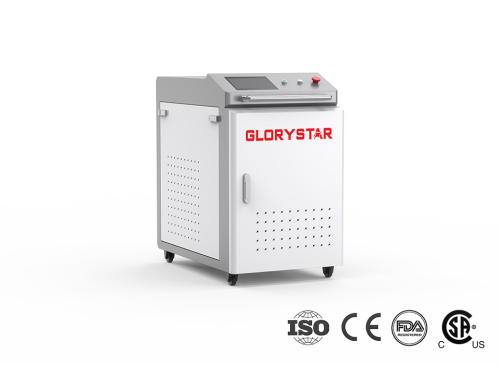
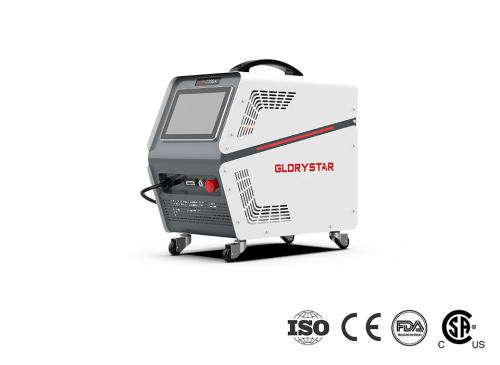
For repair work, maintenance, small-batch production, and flexible fabrication, a handheld laser welding machine can provide greater operator flexibility.
For high-volume manufacturing, automated laser welding can provide better process consistency and production efficiency.
Automated systems can integrate:
Precision fixtures
Automatic positioning
Vision systems
Motorized worktables
PLC control
Robotic systems
Automatic loading and unloading
Production line integration
The right configuration depends on the production volume, component geometry, welding requirements, and level of automation required by the manufacturer.
How to Choose the Right Laser Welding Solution
Choosing a laser welding machine should start with the application rather than the machine itself.
Manufacturers should evaluate several key factors.
Material and Thickness
The material and thickness determine the required laser power, welding parameters, and process configuration.
Joint Design
Different joint structures require different welding approaches. Butt joints, lap joints, corner joints, and other configurations may require different fixture and welding head arrangements.
Production Volume
Small-batch manufacturing may benefit from a flexible handheld or semi-automatic system, while mass production may require a fully automated welding solution.
Welding Quality Requirements
Applications involving structural strength, electrical conductivity, or leak-tightness may require specific welding parameters and quality-control procedures.
Automation Requirements
Manufacturers should consider whether automatic positioning, vision inspection, robotic welding, material handling, or production-line integration is required.
Customized Laser Welding Solutions from Glorystar Laser
A successful welding process depends on more than laser power. The laser source, welding head, fixture, motion system, control configuration, and process parameters must work together according to the application.
Glorystar Laser provides laser welding equipment and customized Laser Welding Solutions for different industrial applications.
The solution can be developed according to the customer's product structure, material, thickness, welding path, production volume, and automation requirements.
Applications can include liquid cooling components, battery components, automotive parts, stainless steel products, aluminum components, copper components, and other precision metal products.
For manufacturers looking to improve welding precision, production consistency, and automation, a customized laser welding solution can provide a more suitable path from sample testing to mass production.
Build Your Laser Welding Solution
Every welding application has different requirements. The most suitable equipment depends on the material, component design, welding specifications, production volume, and automation goals.
Whether you need a flexible handheld system or an automated production solution, choosing the right laser welding configuration is essential for achieving stable and repeatable results.
Glorystar Laser can help manufacturers evaluate their welding requirements and develop a suitable Laser Welding Solutions approach for their production process.
Contact Glorystar Laser to discuss your application and explore a customized laser welding solution for your manufacturing needs.