As industries continue to evolve toward higher power density and more compact system design, thermal management has become one of the most critical engineering challenges. Liquid cooling welding plays a key role in ensuring the manufacturing quality of these systems, which are now widely used in data centers, energy storage systems, and new energy vehicles due to their superior heat dissipation efficiency compared to traditional air cooling systems.
However, the reliability of a liquid cooling system is not determined only by design—it is heavily dependent on manufacturing quality, especially welding quality of key components such as manifolds, cold plates, and bellows.
In this context, liquid cooling welding has become a core process in advanced manufacturing. It directly affects sealing integrity, structural stability, and long-term operational safety.
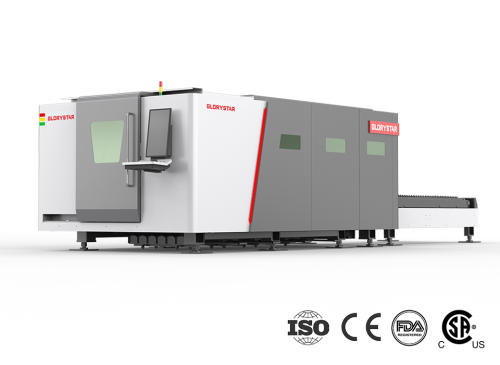
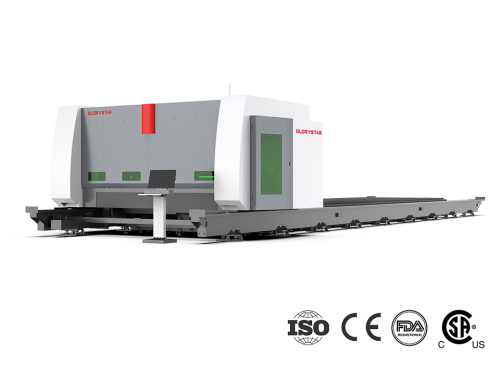
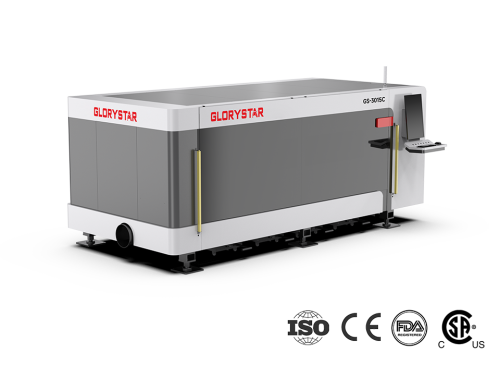
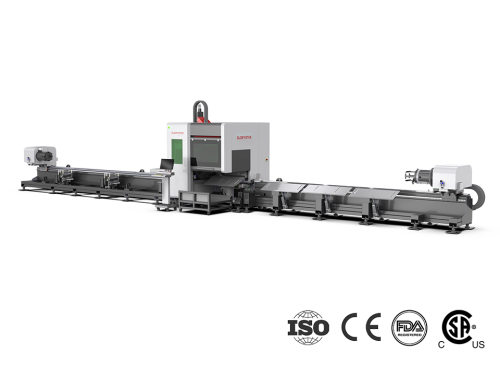
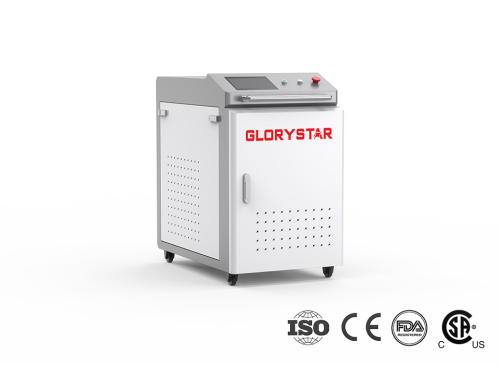
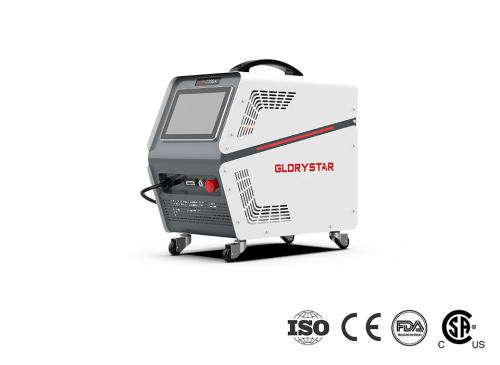
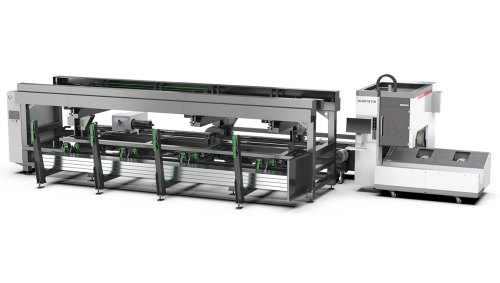
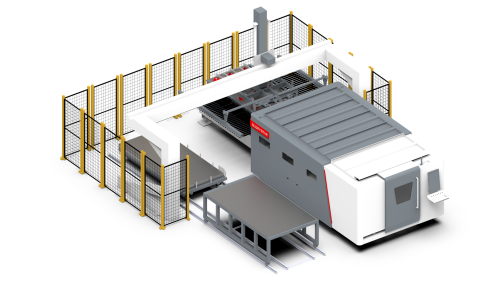
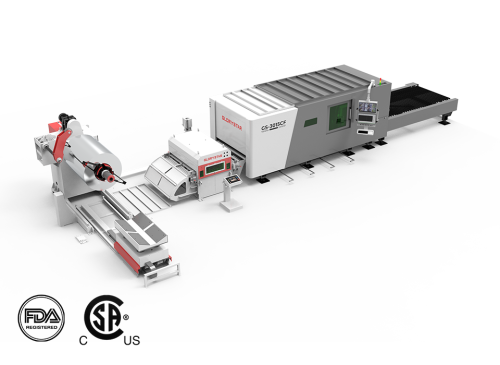
Glorystar provides specialized laser welding systems designed specifically for liquid cooling components, helping manufacturers achieve higher consistency, lower defect rates, and improved production efficiency.
Main Challenges in Liquid Cooling Welding Processes
Although different components serve different functions in a liquid cooling system, they share several common welding challenges that significantly impact final product quality.
One of the most critical issues is leakage risk. Liquid cooling systems operate in sealed environments where even microscopic welding defects can cause fluid leakage. This makes sealing performance the top priority in liquid cooling welding.
Another major challenge is thermal deformation. Traditional welding methods often introduce excessive heat, which can distort thin metal structures and reduce dimensional accuracy. This can lead to assembly issues and performance instability.
In addition, achieving consistent quality in mass production is difficult. Many manufacturers struggle with variations in weld quality between batches, especially when manual or semi-automated processes are used.
Structural strength is also a key concern. Weld joints must withstand long-term pressure cycles, vibration, and thermal expansion without failure.
Finally, post-processing requirements such as grinding, polishing, and leak testing rework significantly increase production cost and reduce efficiency.
These challenges clearly demonstrate why advanced laser-based liquid cooling welding technologies are becoming essential in modern industrial production.
Why Laser Technology Is Ideal for Liquid Cooling Welding
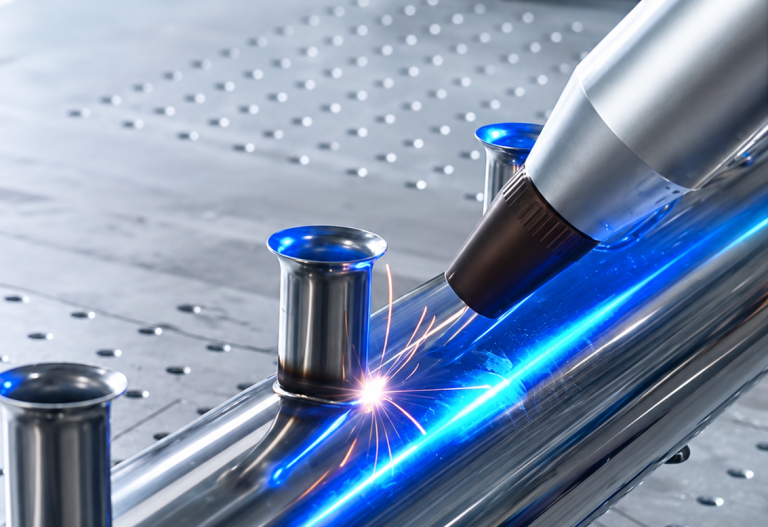
Laser welding provides a highly concentrated and controllable energy source, allowing precise control over weld depth, heat input, and seam formation.
Compared with conventional welding methods, laser-based liquid cooling welding offers significant advantages in both quality and efficiency.
First, it produces stable and continuous weld seams, which greatly improves sealing reliability. This is especially important for fluid systems where leakage cannot be tolerated.
Second, the heat-affected zone is much smaller, reducing the risk of deformation and maintaining dimensional accuracy of complex components.
Third, laser welding ensures high repeatability, making it suitable for large-scale industrial production where consistency is critical.
Fourth, weld appearance is cleaner and more uniform, reducing or even eliminating the need for secondary finishing processes.
Finally, laser welding significantly improves joint strength while reducing defect rates, ensuring long-term reliability in demanding operating conditions.
With advanced systems developed by Glorystar, manufacturers can achieve more stable and scalable performance in liquid cooling welding applications.
Manifold Welding Applications
Manifolds are one of the most complex components in liquid cooling systems. They typically contain multiple ports, internal channels, and connection interfaces that require precise welding at every joint.
In these applications, manifolds require both structural integrity and perfect sealing across multiple connection points. Any inconsistency in weld quality may lead to leakage or uneven fluid distribution.
Laser welding provides precise energy control and accurate trajectory following, ensuring consistent weld formation even in complex geometries. This improves overall product reliability while reducing defect rates in batch production.
As a result, manifold manufacturing becomes more stable and efficient when using laser-based liquid cooling welding solutions.
Cold Plate Welding Applications
Cold plates are widely used in data centers and energy storage systems due to their excellent thermal conductivity and heat exchange efficiency. However, they require long, continuous weld seams with extremely strict sealing requirements.
In liquid cooling welding, cold plates present a unique challenge because they are highly sensitive to thermal deformation. Even slight distortion can affect flatness, assembly accuracy, and cooling efficiency.
Laser welding solves this problem by providing precise heat control and stable energy distribution. This ensures smooth weld formation while maintaining structural integrity.
In addition, reduced post-processing requirements make laser welding highly suitable for high-volume production environments where efficiency and consistency are essential.
Bellows Welding Applications
Bellows are flexible, thin-walled components used for vibration absorption and fluid transfer in liquid cooling systems. Their structure makes them extremely sensitive to heat input and mechanical stress during welding.
Bellows require extremely precise energy control to avoid burn-through, deformation, or loss of flexibility.
Laser welding ensures stable and controlled energy delivery, allowing manufacturers to achieve strong, clean, and leak-free joints while maintaining the flexibility of the structure.
This makes laser welding particularly suitable for bellows used in high-performance thermal management systems.
Manufacturing Advantages with Glorystar
Glorystar focuses on delivering practical industrial solutions tailored for real production environments rather than generic welding equipment.
In liquid cooling welding applications, Glorystar systems help manufacturers improve overall production performance in several key areas.
Weld quality becomes more stable and consistent, ensuring uniform sealing performance across all components. Thermal deformation is significantly reduced, improving dimensional accuracy and assembly compatibility.
Production efficiency is also improved due to lower defect rates and reduced rework requirements. This directly helps manufacturers reduce cost and increase throughput.
More importantly, Glorystar systems ensure stable performance in mass production environments, which is essential for industries requiring large-scale, high-reliability output.
Conclusion
As liquid cooling systems continue to expand across data centers, energy storage, and electric vehicle industries, the importance of welding quality continues to increase.
Liquid cooling welding is no longer just a manufacturing step—it is a critical process that determines sealing reliability, structural strength, and production efficiency.
From manifolds to cold plates and bellows, laser welding provides a precise, stable, and scalable solution for modern industrial manufacturing challenges.
With advanced laser welding systems from Glorystar, manufacturers can achieve higher consistency, improved efficiency, and stronger competitiveness in global markets.