As industries continue to pursue higher efficiency, better thermal management, and greater system reliability, manifold components are playing an increasingly important role in both industrial cooling systems and new energy vehicle applications. Although relatively small in size, manifolds serve as the central hub of fluid distribution networks, directly affecting cooling performance, energy efficiency, and system safety. To meet increasingly stringent quality and performance requirements, manifold laser welding is becoming the preferred manufacturing solution, enabling higher precision, stronger weld integrity, and improved sealing reliability for modern manifold production.
However, as cooling systems become more compact and complex, traditional welding methods are struggling to meet modern manufacturing requirements. Laser welding technology is emerging as a highly effective solution, delivering superior precision, stronger sealing performance, and higher production efficiency.
What Is a Manifold and Why Is It So Important?
A manifold may appear to be a simple component, but it functions as the “ traffic controller ” of fluid systems. Its primary role is to distribute, collect, and manage the flow of coolant throughout a cooling network.
Manifolds in Industrial Cooling Systems
In industrial equipment, manifolds distribute cooling water from a main pipeline to multiple machines or subsystems. This ensures that every critical component receives the correct amount of cooling, preventing localized overheating and maintaining stable operating temperatures.
Whether in manufacturing facilities, automated production lines, laser processing equipment, energy storage systems, or data centers, the reliability of the manifold directly impacts:
Equipment performance
Production stability
Energy efficiency
Equipment lifespan
Maintenance costs
Even a minor leak or flow imbalance can lead to unexpected downtime and costly repairs.
Manifolds in New Energy Vehicles
In electric vehicles, thermal management has become one of the most critical factors affecting battery performance and safety.
Battery packs operate most efficiently within a specific temperature range. Excessive heat can accelerate battery degradation, while low temperatures reduce charging efficiency and driving range.
Manifolds are widely used in battery cooling plates and liquid cooling systems to distribute coolant evenly across multiple battery modules. By ensuring balanced heating and cooling throughout the battery pack, manifolds help achieve:
Longer battery life
Improved charging speed
Enhanced driving range consistency
Better thermal safety
Increased overall vehicle reliability
As EV manufacturers continue to pursue higher energy density batteries, the quality requirements for manifold production are becoming increasingly demanding.
Challenges of Traditional Welding Methods
Conventional welding processes such as TIG welding, brazing, and arc welding have been widely used for manifold manufacturing for many years. However, these methods often encounter significant limitations when producing modern cooling components.
Uneven Heat Input
Traditional welding introduces large amounts of heat into the workpiece, causing localized expansion and contraction. This can result in:
Distortion
Warping
Misalignment
Internal channel deformation
For manifolds containing multiple fluid channels, even slight deformation can affect coolant flow performance.
Large Heat-Affected Zones
Excessive heat can alter the material properties surrounding the weld area, reducing corrosion resistance and mechanical strength.
This issue is particularly critical when welding aluminum alloys commonly used in electric vehicle cooling systems.
Reduced Sealing Reliability
Cooling systems often operate under pressure. Any welding defects such as porosity, incomplete fusion, or microcracks may eventually lead to coolant leakage.
Leaks not only reduce system efficiency but can also cause catastrophic equipment failures.
Lower Production Efficiency
Traditional welding methods frequently require:
Multiple processing steps
Extensive operator involvement
Post-weld corrections
Rework and repairs
As production volumes increase, these inefficiencies become significant bottlenecks.
How Laser Welding Redefines Manifold Manufacturing
Laser welding technology addresses many of the limitations associated with conventional welding processes.
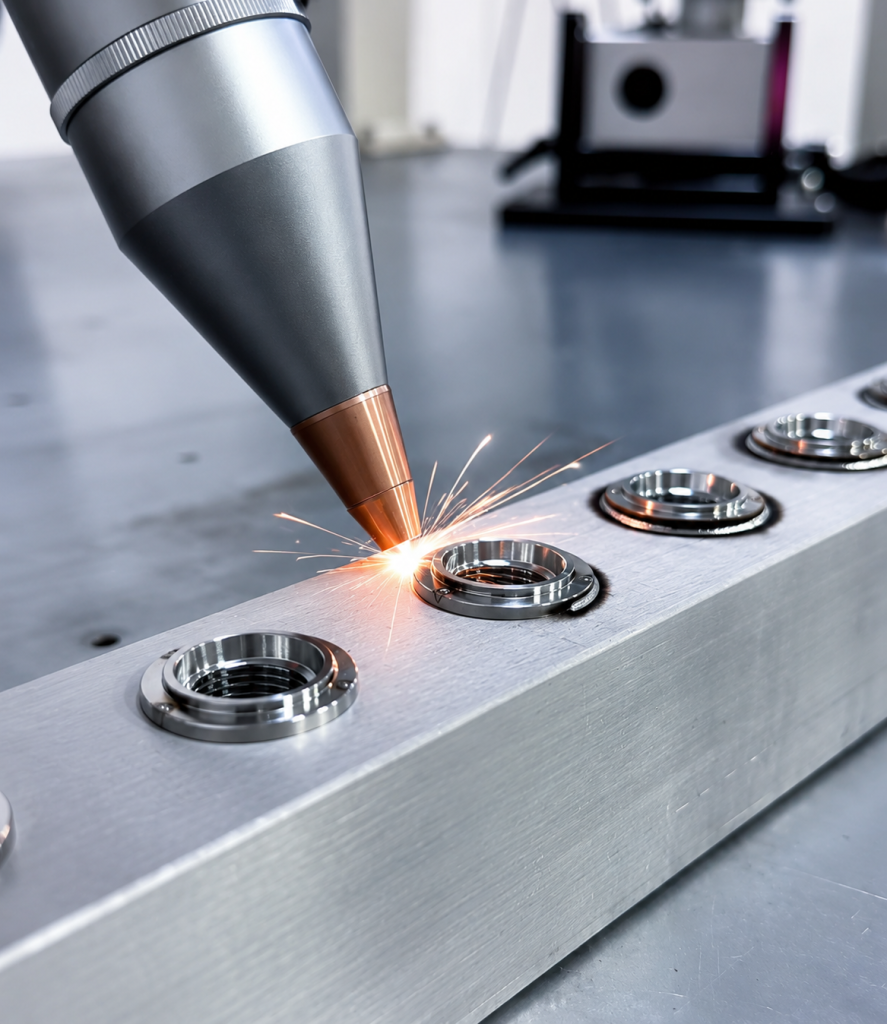
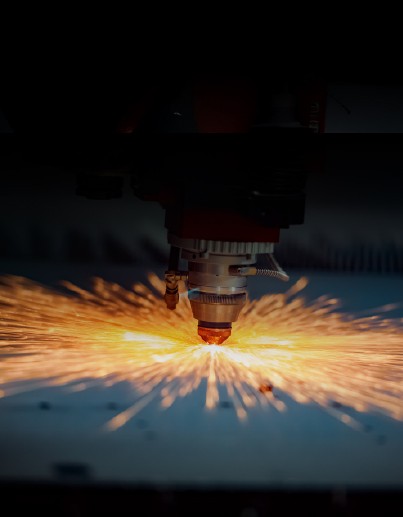
By utilizing a highly concentrated laser beam, energy can be delivered precisely where it is needed, producing stronger welds while minimizing thermal impact on surrounding materials.
Exceptional Precision
Modern laser welding systems can achieve positioning accuracy as fine as ±0.05 mm.
This level of precision allows manufacturers to weld complex manifold structures with multiple channels, corners, and connection points while maintaining excellent dimensional consistency.
Even intricate geometries can be welded with full 360-degree coverage and minimal risk of defects.
Extremely Low Heat Input
One of the greatest advantages of laser welding is its narrow heat-affected zone.
Because heat is concentrated into a very small area:
Material distortion is minimized
Internal channels maintain their original dimensions
Post-weld straightening is often unnecessary
Assembly accuracy is improved
This is especially valuable for thin-wall manifolds and precision cooling components.
Superior Sealing Performance
For cooling systems, leak prevention is critical.
Laser welding produces dense, continuous weld seams with excellent metallurgical bonding. The resulting joints offer:
High pressure resistance
Excellent airtightness
Strong fatigue resistance
Long-term reliability
Many manufacturers report near 100% pass rates during leak testing when optimized laser welding processes are applied.
Higher Productivity
Laser welding significantly reduces processing time compared to traditional methods.
Benefits include:
Faster welding speeds
Reduced setup time
Fewer secondary operations
Lower labor requirements
For large-scale manifold production, these improvements can dramatically reduce manufacturing costs and shorten delivery cycles.
Deep Penetration Capability
Laser welding can achieve penetration-to-width ratios of up to 10:1, making it suitable for thick-wall manifold structures that require strong, reliable joints.
Deep penetration welding also improves structural integrity while reducing the number of welding passes required.
Broad Material Compatibility
Modern manifold designs utilize a wide range of materials, including:
Aluminum alloys
Stainless steel
Copper
Mixed-metal assemblies
Laser welding systems can be optimized for different materials and thicknesses, enabling manufacturers to quickly adapt to changing production requirements.
Customized Laser Welding Solutions for Modern Manufacturing
Every manifold design presents unique challenges. Factors such as material selection, wall thickness, internal channel structure, and production volume all influence the welding process.
A complete laser welding solution should include more than just equipment.
Professional manufacturers can provide:
Process Validation
Before production begins, welding parameters are tested and optimized to ensure maximum strength and sealing performance.
Custom Fixture Design
Dedicated fixtures help maintain positioning accuracy and ensure repeatable welding quality throughout production.
Automation Integration
Laser welding systems can be integrated directly into existing production lines or configured as standalone workstations.
Additional modules may include:
Vision positioning systems
Leak testing stations
Robotic loading and unloading
Real-time quality monitoring
Smart manufacturing software
These technologies support fully automated production while minimizing human intervention.
The Future of Manifold Manufacturing
Gantry Laser Welding Machine: A New Productivity Driver for Stainless Steel Manifold Welding
In modern industrial manufacturing, especially in industrial cooling systems, data center liquid cooling, and electric vehicle thermal management, manifold laser welding is rapidly becoming a core enabling technology for producing high-performance stainless steel manifolds.
As cooling systems continue to evolve toward higher pressure resistance, higher integration density, and stricter reliability standards, manufacturers are under increasing pressure to improve both structural precision and production efficiency. In this context, welding quality is no longer just a processing step—it directly determines system safety, service life, and operational stability.
Among various materials used for manifolds, stainless steel has become the dominant choice in high-end applications due to its excellent corrosion resistance, mechanical strength, and long-term durability.
Material Selection for Industrial Cooling Systems
In industrial cooling environments, especially those involving continuous operation, high pressure, or corrosive media, material selection plays a decisive role in system performance.
Stainless steel (304 or 316L) is widely considered the optimal material for manifold production.
Its key advantages include:
High mechanical strength, capable of withstanding pressures above 2.4 MPa with long-term structural stability
Strong corrosion resistance, with 316L offering superior performance in chemical plants, coastal environments, and humid conditions
Excellent compatibility with manifold laser welding, which ensures minimal thermal distortion and highly stable sealing quality
Long operational lifespan, significantly reducing maintenance frequency and total system lifecycle cost
Compared with copper or aluminum alloys, stainless steel provides a better balance between strength, durability, and cost-effectiveness in demanding industrial applications.
Welding Challenges of Stainless Steel Manifolds
Although stainless steel offers outstanding material properties, manufacturing complex manifolds introduces several serious challenges that must be addressed through advanced welding technologies such as manifold laser welding.
1. Extremely high sealing requirements
Manifolds operate as the central fluid distribution hub in cooling systems. Any leakage, even at a microscopic level, can lead to system failure, energy loss, or damage to sensitive electronic components.
Therefore, manufacturers must achieve:
100% airtight sealing
High pressure resistance
Long-term leak-free operation under cyclic thermal loads
2. Complex 3D structural geometry
Modern manifold designs often include multiple inlet and outlet ports arranged in complex spatial configurations. These structures require:
Multi-angle welding capability
Precise alignment control
Consistent weld quality across all joints
Traditional welding methods struggle to maintain uniform quality across such complex geometries.
3. High-volume production consistency
With the growing demand for standardized cooling systems in EVs and industrial equipment, manufacturers must ensure:
Stable batch-to-batch quality
High production efficiency
Full process traceability
Minimal rework or post-processing
These requirements significantly increase the difficulty of traditional manufacturing methods.
Advantages of Manifold Laser Welding
To overcome these limitations, manifold laser welding has emerged as a highly efficient and precise solution for stainless steel manifold manufacturing.
Minimal thermal distortion with high precision
One of the most significant advantages of laser welding is its extremely low heat input. Compared with conventional welding methods, the heat-affected zone can be reduced by approximately 80%–90%.
This results in:
Minimal structural deformation
Better dimensional stability
Preservation of internal channel geometry
Reduced need for post-weld correction
For precision cooling systems, this level of control is critical.
Excellent sealing performance with zero-leak potential
In cooling applications, sealing reliability is one of the most important performance indicators.
Manifold laser welding produces:
Dense and continuous weld seams
Strong metallurgical bonding between materials
High resistance to pressure and thermal cycling
When properly optimized, laser-welded manifolds can achieve near 100% success rates in pressure and leak testing, making them highly suitable for mission-critical applications.
High-efficiency automation for complex geometries
Laser welding systems can be integrated with robotic or gantry platforms to achieve full automation.
This enables:
360° welding of complex joints
Consistent welding speed and quality
Reduced dependency on manual labor
Faster production cycles
Even intricate structures such as saddle joints, circular ports, and multi-channel manifolds can be processed with high repeatability and accuracy.
Broad application adaptability
The flexibility of manifold laser welding allows it to be used across multiple industries, including:
Electric vehicle battery cooling plates
Energy storage thermal management systems
Data center liquid cooling infrastructure
Industrial fluid distribution modules
High-precision heat exchange systems
As thermal management requirements continue to increase, the adoption of laser welding technology is expected to expand further.
Advantages of Gantry Laser Welding Machines
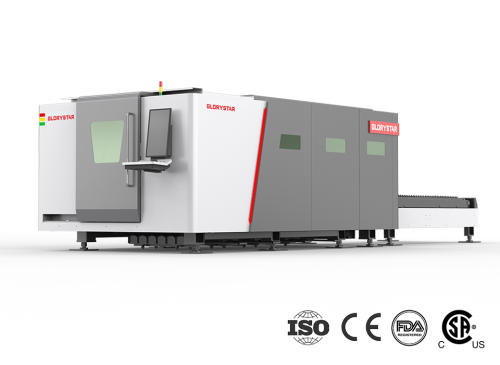
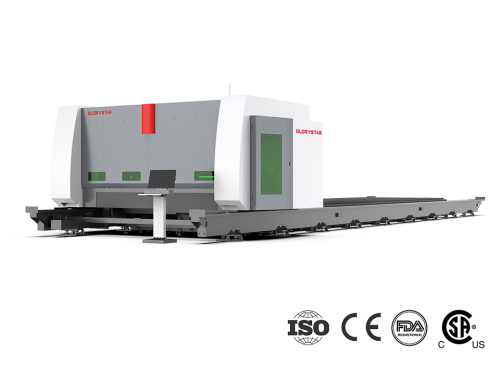
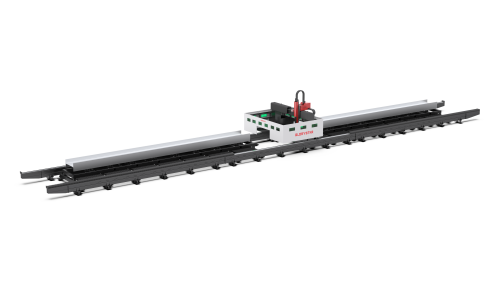
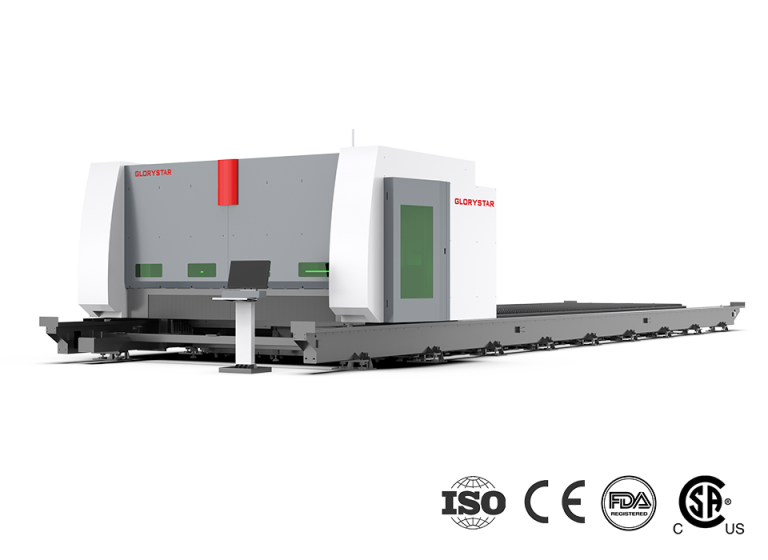
To fully unlock the potential of manifold laser welding, advanced equipment such as gantry laser welding machines plays a critical role in industrial production environments.
Application-specific system design
Gantry laser welding machines are typically equipped with:
Continuous fiber laser sources
Oscillating welding heads
High-rigidity mechanical structures
This combination ensures stable and repeatable welding performance even under high-load production conditions.
Precision 3D spatial processing capability
One of the key advantages of gantry systems is their ability to handle complex spatial welding tasks.
They enable:
One-time welding of multiple interfaces
High-precision positioning in 3D space
Improved structural integrity of assembled components
Reduced cumulative assembly error
This is especially important for large or multi-port manifold structures.
Strong compatibility with stainless steel materials
When processing stainless steel, laser energy must be carefully controlled to ensure weld quality.
Gantry laser systems provide:
High energy density laser output
Beam oscillation for improved weld uniformity
Stable penetration depth control
Reduced risk of porosity and cracking
The result is a dense, uniform weld seam that significantly improves leakage resistance.
Intelligent welding monitoring system
Modern gantry laser welding machines are often equipped with real-time monitoring technologies, including:
Weld seam inspection systems
Temperature and energy feedback control
Defect detection for porosity and cracks
Process data recording for traceability
This ensures that manifold laser welding processes remain stable, consistent, and fully controllable during mass production.
Conclusion
As industrial cooling systems and fluid management technologies continue to advance, manifold laser welding is transitioning from an optional manufacturing method to a standard process for high-performance stainless steel manifolds.
With increasing demands for reliability, efficiency, and precision, traditional welding technologies are no longer sufficient to meet modern manufacturing requirements.
Gantry laser welding machines, with their high precision, automation capability, and intelligent monitoring systems, provide a powerful and scalable solution for complex manifold production.
By adopting advanced laser welding technology, manufacturers can significantly improve product quality, reduce leakage risks, enhance production efficiency, and achieve stable large-scale manufacturing—laying a strong foundation for the next generation of industrial cooling systems.