In industrial metal fabrication, cutting quality affects more than the appearance of a finished part. Rough edges, excessive dross, dimensional deviations, and heat-related deformation can increase post-processing work and disrupt downstream production. Choosing a reliable sheet metal laser cutter is therefore only part of the solution. Cutting performance also depends on laser parameters, optical conditions, assist gas, mechanical accuracy, and process control. Understanding these factors helps manufacturers achieve more consistent results and make better equipment investment decisions.
How Do Laser Power and Cutting Speed Affect Cutting Quality?
Laser power and cutting speed work together to determine how much energy is delivered to the material during cutting. When power is insufficient for a particular material thickness, the laser may fail to penetrate completely, leaving uncut sections or rough edges. Excessive cutting speed can produce similar problems because the material does not receive enough energy to complete the cutting process.
However, simply increasing laser power or reducing speed does not guarantee better results. Excessive heat input may widen the kerf, increase the heat-affected zone, and cause material deformation. Manufacturers should establish a suitable processing window based on material type, thickness, laser power, and assist gas conditions. A well-matched combination helps maintain cutting consistency without sacrificing productivity.
How Does Focus Position Affect Sheet Metal Laser Cutting Quality?
The focus position determines how laser energy is distributed through the material. An unsuitable focus setting can affect kerf geometry, penetration, and the removal of molten metal.
For thin sheets, the focus position may be adjusted to achieve a stable and narrow cut. Thicker materials often require different focal settings to maintain sufficient energy distribution throughout the cutting depth. The correct position depends on the material, thickness, laser characteristics, and cutting method.
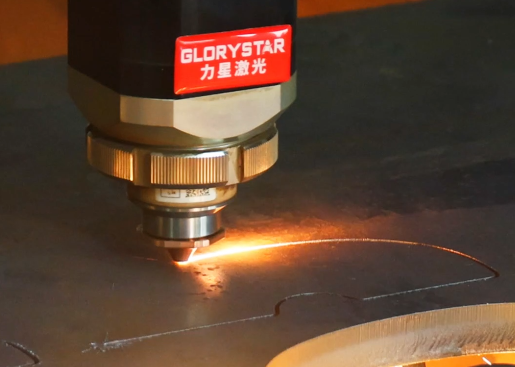
The condition of the cutting head also matters. Damaged nozzles, contaminated protective windows, incorrect nozzle alignment, or an unsuitable nozzle-to-sheet distance can interfere with beam delivery and assist gas flow. Regular inspection of optical components and cutting head alignment helps maintain stable processing conditions.
How Does Assist Gas Affect Sheet Metal Laser Cutting Quality?
Assist gas plays an important role in removing molten material from the kerf and controlling the cutting environment. Oxygen and nitrogen are commonly used in industrial sheet metal laser cutting, but they produce different processing results.
Oxygen reacts with carbon steel during cutting, generating additional heat through an oxidation reaction. This makes it useful for many carbon steel applications, although the resulting cut edge may contain an oxide layer.
Nitrogen is generally used when manufacturers need cleaner edges with less oxidation, particularly when processing stainless steel and certain aluminum applications. It helps expel molten metal without relying on the same oxidation reaction.
Gas pressure, purity, nozzle condition, and material thickness all influence the final result. Insufficient gas flow may leave dross on the lower edge, while unsuitable gas settings can increase operating costs without improving cut quality. Manufacturers should select assist gas according to material requirements and subsequent processes such as welding, painting, or surface finishing.
What Causes Burrs, Dross, and Heat-Affected Zones in Laser Cutting?
Common cutting defects often indicate that one or more processing conditions need adjustment.
Burrs may develop when molten material does not leave the cutting area cleanly. Incorrect speed settings, unsuitable focus positions, and unstable gas flow can contribute to their formation.
Dross refers to resolidified material attached to the lower edge of a cut. It can result from insufficient melt ejection, unsuitable gas pressure, nozzle problems, or an unbalanced combination of power and speed.
Heat-affected zones (HAZ) occur when heat changes the material's properties near the cutting edge. Although laser cutting concentrates energy within a relatively small area, excessive heat input and unsuitable cutting sequences can still increase thermal effects and deformation.
Improving these conditions requires identifying the actual cause rather than changing parameters randomly. Checking the cutting edge, nozzle, gas supply, focus position, and processing speed provides a more reliable starting point for troubleshooting.
How Does CNC Accuracy Affect Sheet Metal Laser Cutting Precision?
Cutting quality is not determined by the laser beam alone. The mechanical structure and motion control system of a CNC laser cutter also influence the accuracy and consistency of finished parts.
Linear guide rails, rack-and-pinion transmission, servo motors, and the machine bed all contribute to motion performance. Mechanical vibration, transmission errors, or structural instability can affect the cutting path, particularly during high-speed movement and complex contour processing.
Two important indicators are positioning accuracy and repeatability. Positioning accuracy describes how closely the machine reaches a commanded coordinate, while repeatability measures how consistently it returns to the same position.
For manufacturers processing large quantities of sheet metal parts, consistent machine movement is essential. A well-designed machine structure, properly maintained transmission components, and regular calibration help support reliable production accuracy.
How to Improve Sheet Metal Laser Cutting Quality Through Process Testing?
Consistent cutting quality requires more than relying on standard parameter settings. Manufacturers should establish a practical testing and verification process.
First, record the material grade, thickness, laser power, cutting speed, focus position, assist gas, and nozzle configuration. Next, inspect the finished edge for roughness, burrs, dross, and signs of thermal deformation.
When defects appear, adjust relevant parameters systematically rather than changing several variables simultaneously. Comparative cutting tests using the same material and thickness can help identify which settings produce better results.
Dimensional inspection is equally important. Measuring finished parts helps verify whether the CNC system and mechanical movement maintain the required tolerances. Once stable processing conditions are established, recording the verified parameters provides a useful reference for repeat production.
Choosing a Sheet Metal Laser Cutter for Consistent Production Quality
Achieving reliable results starts with selecting equipment that matches actual manufacturing requirements. Laser power, cutting head configuration, CNC control, machine bed rigidity, working area, and assist gas systems should all be considered together.
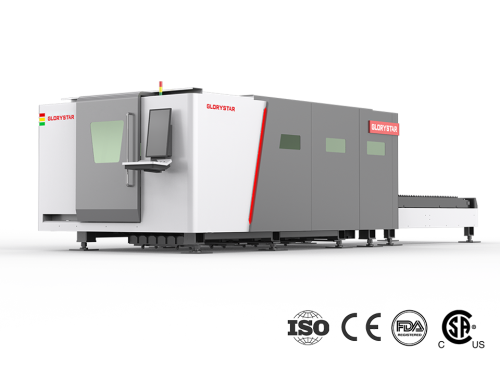
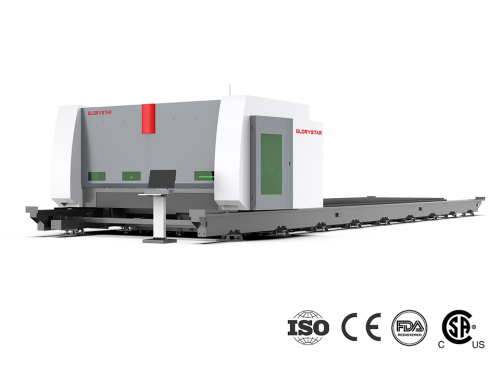
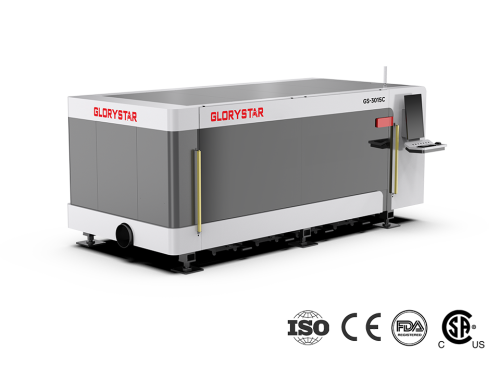
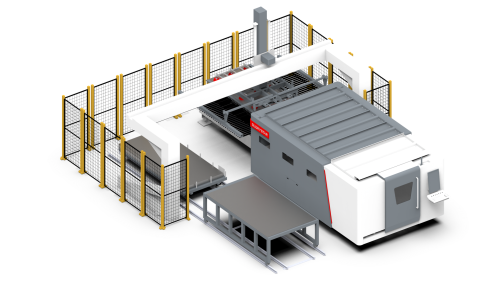
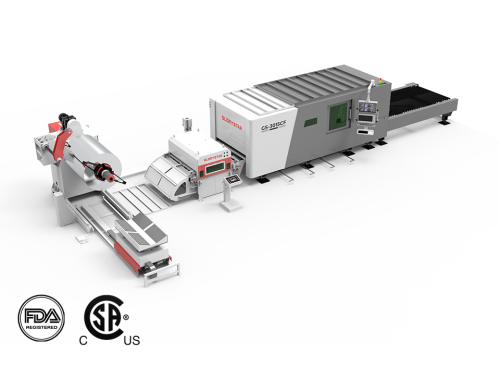
With more than 20 years of experience in laser equipment manufacturing, Glorystar provides industrial fiber laser cutting machines for different metal fabrication requirements. Its product range includes enclosed sheet metal laser cutting solutions designed for industrial production environments.
Rather than choosing a machine based on power specifications alone, manufacturers should evaluate actual cutting samples, machine configuration, production requirements, and long-term operating costs. Glorystar works with customers to identify suitable equipment solutions that balance processing performance and investment efficiency.
Conclusion
The cutting quality of a sheet metal laser cutter depends on the interaction between laser parameters, focus position, assist gas, mechanical accuracy, and process control. For manufacturers seeking consistent production results, choosing a properly configured CNC laser cutter and maintaining validated processing conditions are equally important. With suitable equipment and process management, businesses can improve edge quality, reduce unnecessary post-processing, and maintain more reliable metal fabrication operations.