As modern industries continue moving toward higher power density systems and more compact thermal management designs, liquid cooling technology has become a critical solution across energy storage, electric vehicles, data centers, and high-performance industrial equipment. Among the key components in these systems, the liquid cooling manifolds (or water distributor) play a central role in ensuring stable fluid distribution, sealing reliability, and long-term operational safety.
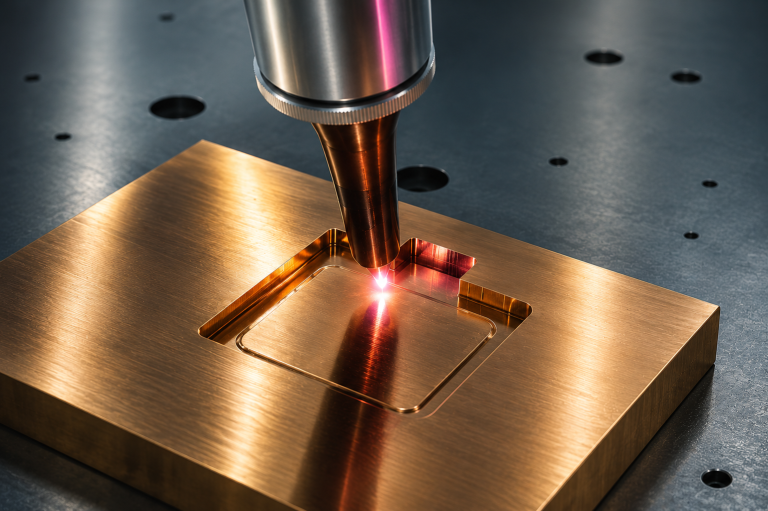
Traditional welding methods often struggle to meet the increasingly strict requirements for precision, airtightness, and batch consistency. In contrast, laser welding technology has emerged as a superior solution, offering significant improvements in accuracy, structural integrity, and production efficiency.
Below is a detailed overview of the key advantages of laser welding in the manufacturing of liquid cooling manifolds.
1. High-Precision Welding with Minimal Thermal Deformation
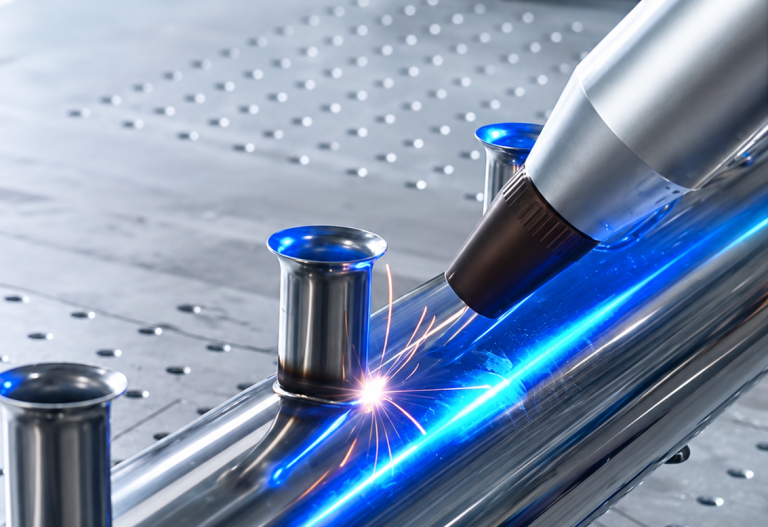
One of the most important advantages of laser welding is its extremely concentrated heat input. Compared with conventional arc welding or TIG welding, the heat-affected zone (HAZ) in laser welding is significantly smaller—typically only about one-fifth to one-tenth of traditional processes.
This narrow thermal impact brings several critical benefits:
First, the stainless steel base material retains its original mechanical properties much more effectively. There is minimal risk of grain structure degradation or unwanted hardening/softening in the welded area. This is especially important for liquid cooling manifolds, where dimensional stability directly affects assembly accuracy and sealing performance.
Second, thermal deformation is greatly reduced. Complex structures such as curved channels, multi-port joints, and thin-wall components maintain their original geometry after welding. This ensures that the final product meets strict tolerance requirements without requiring extensive post-processing or reshaping.
Finally, the reduced heat input also lowers internal stress accumulation, improving long-term structural stability and reducing the risk of cracking or warping during service.
Overall, laser welding ensures that liquid cooling manifolds achieve “near-net-shape” precision with minimal distortion, making it ideal for high-end thermal management systems.
2. Excellent Airtightness and Zero-Leakage Performance
In liquid cooling systems, even the smallest leakage can lead to system failure, performance degradation, or safety risks. Therefore, sealing quality is one of the most critical performance indicators for manifolds.
Laser welding provides a dense, uniform, and high-strength weld seam. The fusion zone between materials is extremely stable and closely matches the base metal in both strength and corrosion resistance. This creates a continuous metallurgical bond rather than a mechanical joint.
As a result, laser-welded manifolds can easily withstand:
High internal pressure conditions
Long-term cyclic loading
Corrosive coolant environments
Temperature fluctuations during operation
In addition, laser welding significantly reduces common defect risks such as porosity, undercutting, and incomplete fusion. When combined with modern pressure testing and helium leak detection methods, manufacturers can achieve extremely high sealing reliability.
This makes laser welding particularly suitable for applications requiring absolute safety and durability, such as energy storage cooling plates, electric vehicle battery systems, and precision industrial cooling loops.
3. High Automation Capability for Complex Weld Structures
Modern liquid cooling manifolds are rarely simple geometries. They often include saddle-shaped joints, circular welds, longitudinal seams, and multi-angle branch connections. Traditional manual welding methods struggle to ensure consistency across these complex structures, especially in mass production.
Laser welding systems, especially those integrated with robotic arms or multi-axis platforms, offer strong automation capability and precise motion control. This allows manufacturers to achieve full 360-degree welding coverage without blind spots.
Key advantages include:
Ability to complete complex weld paths in a single setup
Stable energy output for consistent weld quality
High repeatability across large production batches
Reduced dependence on manual operator skill
Additionally, automated laser welding significantly shortens cycle time per part. Compared to traditional welding, production efficiency can be greatly improved while maintaining consistent quality standards.
This is especially valuable in industries such as automotive thermal management and energy storage systems, where large-scale standardized production is required.
4. Full-Scenario Adaptability for High-Volume Industrial Production
Another major advantage of laser welding is its wide application range and strong adaptability to different industrial scenarios. Liquid cooling manifolds are used in many demanding environments, and each application requires different performance characteristics.
Laser welding is suitable for manufacturing:
New energy vehicle battery cooling manifolds
Energy storage thermal management distribution systems
Data center liquid cooling circulation modules
Industrial heat exchange and fluid distribution pipelines
High-precision electronic cooling assemblies
In all these scenarios, the requirements are similar: high sealing performance, structural durability, and stable batch production quality.
Laser welding technology meets these requirements while also supporting different material thicknesses, complex geometries, and customized designs. Whether it is thin-wall stainless steel components or multi-port integrated structures, laser welding provides stable and repeatable results.
In addition, it supports modern manufacturing trends such as smart factories and automated production lines. This allows manufacturers to scale production efficiently while maintaining strict quality control standards required by industries such as automotive, aerospace, energy storage, and electronics.
Conclusion
As liquid cooling systems continue to evolve toward higher efficiency, greater integration, and stricter safety standards, the manufacturing requirements for key components like manifolds are becoming increasingly demanding.
Laser welding stands out as a superior solution by delivering:
Extremely low thermal deformation and high dimensional accuracy
Strong, airtight, and corrosion-resistant weld seams
High automation capability for complex geometries
Broad adaptability across multiple industrial applications
These advantages not only improve product quality but also significantly enhance production efficiency and consistency.
In the long run, laser welding is not just a manufacturing method—it is a key enabling technology for next-generation thermal management systems in energy storage, electric vehicles, and advanced industrial cooling applications.