Delivery Pressure Is Redefining Modern Shipyard Production
Across the United States, shipyards are operating in an environment where delivery schedules are becoming tighter while production requirements continue to grow. As a result, laser cutting in shipbuilding is gaining increased attention as commercial vessels, offshore engineering projects, and industrial marine structures are expected to be delivered faster, with consistent quality and controlled costs.
For shipyard managers and production directors, the challenge is no longer limited to order volume. The real concern is whether existing fabrication processes can reliably support faster turnaround without creating new bottlenecks. Steel cutting, as one of the earliest and most critical stages in shipbuilding, is increasingly under scrutiny.
As a result, many shipyards are beginning to rethink laser cutting in shipbuilding—not as an optional upgrade, but as a strategic response to ongoing delivery pressure.
The Limitations of Traditional Cutting Methods in High-Load Production
Flame cutting and plasma cutting have long been established methods in shipyard steel processing. These technologies remain useful for certain applications, but their limitations become more apparent when production intensity increases.
Traditional cutting methods often involve larger heat-affected zones, which can lead to distortion in thick steel plates. This distortion may seem minor at the cutting stage, but it frequently creates alignment issues during later assembly. In addition, lower cutting precision often requires extensive secondary operations such as grinding and manual correction, adding time and labor costs.
Another challenge lies in process consistency. When multiple shifts or operators are involved, maintaining uniform cut quality can be difficult. Under tight delivery schedules, these variations can accumulate, slowing overall progress and increasing rework rates.
How Laser Cutting in Shipbuilding Addresses Speed and Consistency
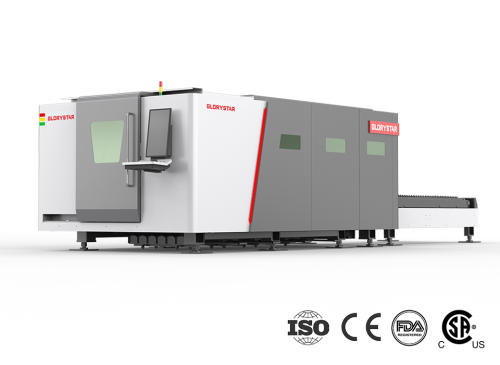
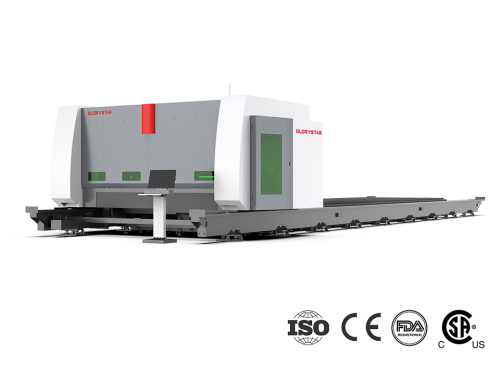
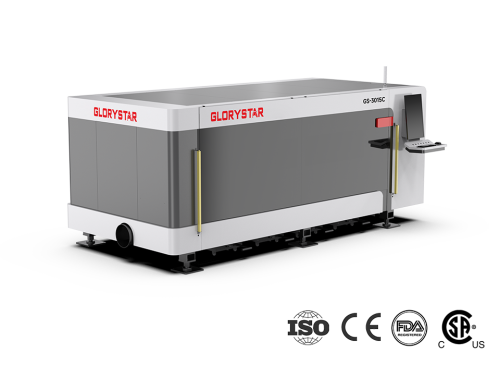
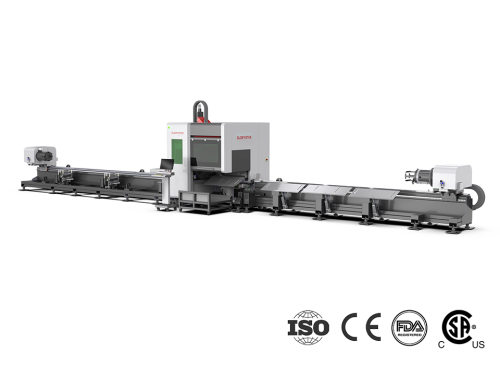
High-power fiber laser systems are increasingly being evaluated by U.S. shipyards seeking more stable and predictable production outcomes. Compared with conventional cutting processes, laser cutting in shipbuilding offers measurable advantages in both speed and consistency.
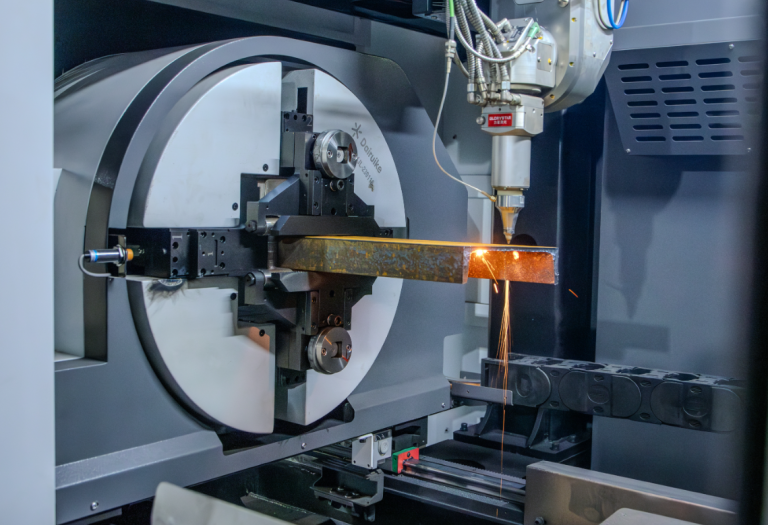
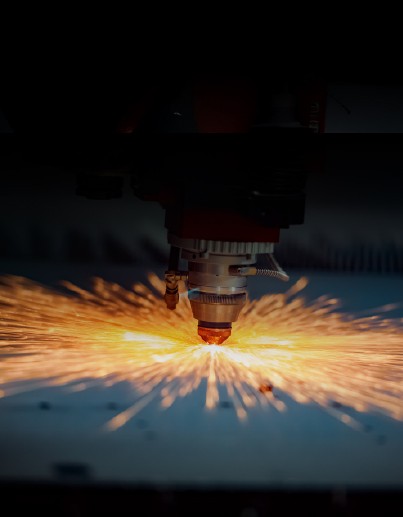
Laser cutting produces a much smaller heat-affected zone, reducing the risk of deformation even when processing thicker plates. This directly improves dimensional accuracy and edge quality, which in turn simplifies downstream assembly. The digital control of laser systems also ensures repeatability, allowing shipyards to maintain consistent quality across large batches of components.
From an operational perspective, faster cutting speeds and reduced need for post-processing help improve throughput without requiring additional floor space or manpower.
Supporting Modular Construction and Parallel Production
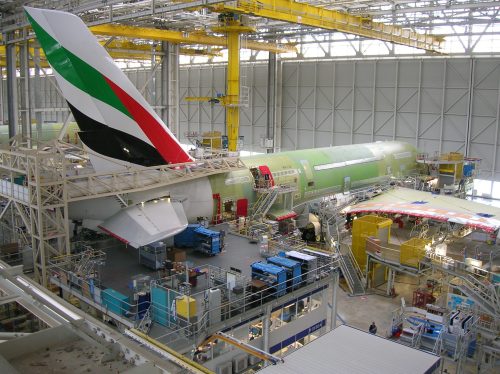
Modern shipbuilding increasingly relies on modular construction and section-based assembly. In this approach, large hull sections and structural modules are fabricated separately and later joined together. This method places higher demands on cutting precision, as inaccuracies at an early stage can disrupt the entire assembly sequence.
Laser cutting supports modular production by delivering uniform, repeatable components that fit together more smoothly during assembly. When multiple projects are running in parallel, this consistency becomes even more valuable. Shipyards can better coordinate workflows, reduce adjustments during fit-up, and maintain overall schedule stability.
For operations managing several vessels or large structures at once, laser cutting in shipbuilding provides a foundation for more predictable production planning.
Reducing Dependence on Skilled Labor Through Digital Processes
Labor availability remains a persistent concern for many U.S. shipyards. Experienced cutting and fabrication personnel are difficult to replace, and training new operators requires significant time and investment.
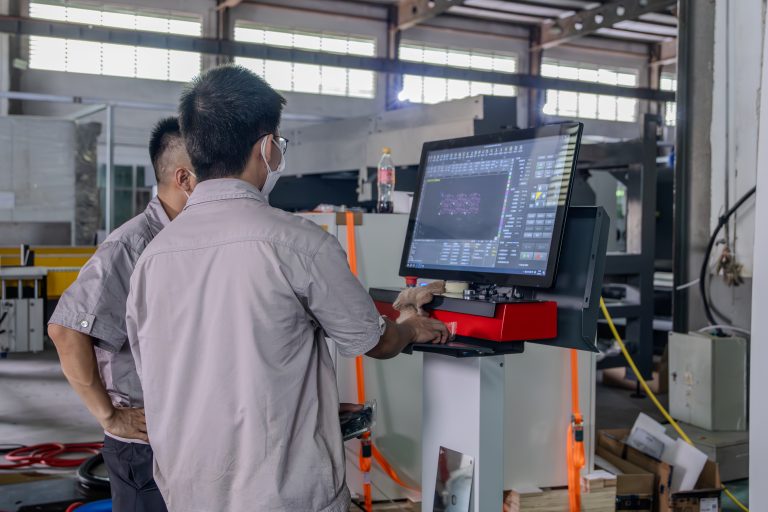
Laser cutting systems help address this challenge by standardizing the cutting process. Once programs and parameters are established, operation becomes less dependent on individual skill levels. This does not eliminate the need for skilled workers, but it reduces production risk when staffing levels fluctuate.
By lowering reliance on manual adjustments and operator-specific techniques, shipyards gain greater resilience in their production schedules.
Evaluating Laser Cutting as a Long-Term Investment
As delivery pressure intensifies, shipyards are rethinking how they evaluate equipment investments. Rather than focusing solely on initial purchase cost, decision-makers are increasingly considering total production impact.
Key evaluation questions include:
Can the system operate reliably under continuous, high-load conditions?
Does it support automation and integration with existing workflows?
Will it remain effective as production volumes and complexity increase?
Laser cutting in shipbuilding is increasingly viewed as a long-term investment in production capability rather than a short-term efficiency improvement.
Key Considerations Before Adopting Laser Cutting Solutions
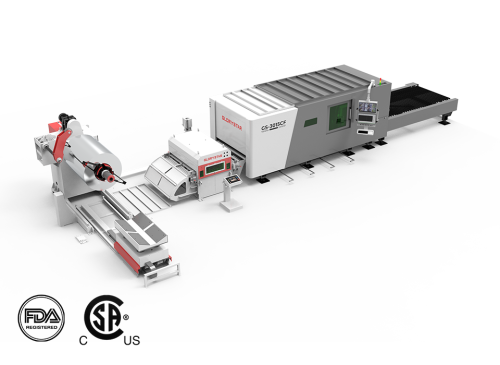
Before implementing laser cutting technology, shipyards should carefully assess their specific requirements. Important considerations include appropriate laser power for typical plate thicknesses, stability when cutting heavy materials, and compatibility with material handling systems.
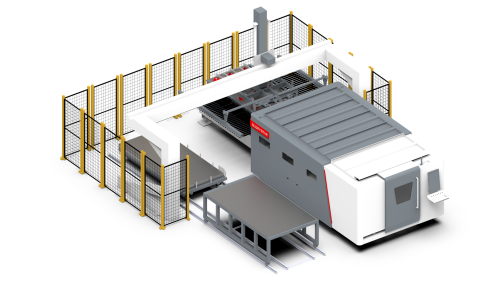
Automation options, such as loading and unloading systems, can further enhance productivity and should be evaluated as part of a broader production strategy. Equipment durability and service support are also critical factors, particularly in high-intensity operating environments.A well-matched laser cutting solution ensures that productivity gains are sustained over time.
Laser Cutting in Shipbuilding as a Competitive Production Strategy
In a market where delivery reliability, quality, and efficiency are closely linked, U.S. shipyards are reassessing how core fabrication technologies support long-term competitiveness. Laser cutting in shipbuilding is emerging as a practical solution for managing delivery pressure while maintaining control over production quality.
By improving precision, stabilizing throughput, and reducing rework, laser cutting helps shipyards adapt to evolving production demands. As more operations adopt this approach, laser cutting is becoming an integral part of modern shipyard manufacturing strategies.