Introduction
As liquid cooling technology continues to expand across electric vehicles (EVs), energy storage systems (ESS), AI data centers, and industrial cooling equipment, stainless steel manifolds have become essential components for efficient thermal management. Although relatively small, a manifold plays a critical role in distributing coolant evenly throughout the system. Any defect in its welds can compromise cooling performance, reduce reliability, and even lead to costly equipment failures.
For this reason, manufacturers increasingly choose 304 and 316L stainless steel for manifold production. These materials offer excellent mechanical strength, outstanding corrosion resistance, and service lives exceeding 70 years under industrial operating conditions. They can withstand working pressures above 2.4 MPa, making them ideal for harsh environments such as chemical plants, offshore facilities, battery cooling systems, and industrial process equipment.
However, the superior properties of stainless steel also make it significantly more difficult to weld. Manufacturers must overcome strict quality requirements while maintaining high production efficiency.
So, why is stainless steel manifold welding so difficult, and how does laser welding overcome these challenges?
Why Is Stainless Steel Manifold Welding So Difficult?
1. Leak-Free Welds Are Non-Negotiable
A manifold serves as the central distribution hub for coolant. Even microscopic pores, cracks, or incomplete fusion in the weld can result in coolant leakage.
In applications such as EV battery cooling plates, server liquid cooling systems, and energy storage thermal management, a tiny leak may cause:
Reduced cooling efficiency
Damage to sensitive electronic components
Unexpected equipment downtime
Significant maintenance costs
Therefore, every welded joint must achieve:
100% leak-tight sealing
Excellent pressure resistance
Long-term corrosion resistance
Reliable performance throughout the product's service life
Meeting these requirements consistently is one of the biggest challenges in manifold manufacturing.
2. Complex Geometry Makes Welding More Difficult
Unlike standard pipe fittings, stainless steel manifolds often feature:
Multiple inlet and outlet ports
Multi-channel internal structures
Three-dimensional layouts
Various pipe diameters and connection angles
A single manifold may require several different weld types, including:
Circular welds
Saddle welds
Longitudinal seams
Multi-angle connector welds
Traditional welding methods struggle to maintain consistent quality across these complex geometries, particularly when accessibility is limited.
3. Thin Stainless Steel Is Sensitive to Heat
To improve heat transfer efficiency and reduce weight, many manifolds are manufactured from thin-wall stainless steel.
Conventional welding introduces excessive heat, which often causes:
Material distortion
Burn-through
Dimensional inaccuracies
Additional post-processing and rework
These issues become especially problematic in precision liquid cooling applications, where tight tolerances are essential.
4. Mass Production Demands High Consistency
As the EV, energy storage, and liquid cooling industries continue to grow, manufacturers are shifting from manual fabrication to automated mass production.
Modern production lines require:
High throughput
Stable welding quality
Low defect rates
Full process traceability
Traditional manual welding can no longer meet these demands while maintaining competitive production costs.
How Laser Welding Solves These Challenges
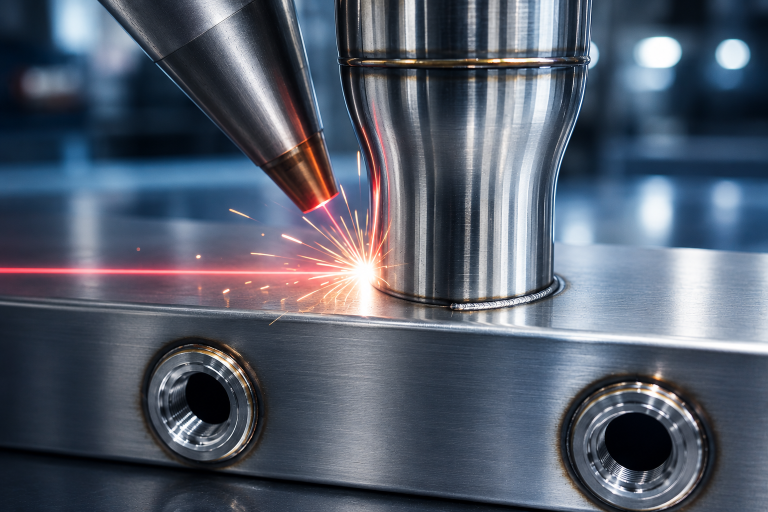
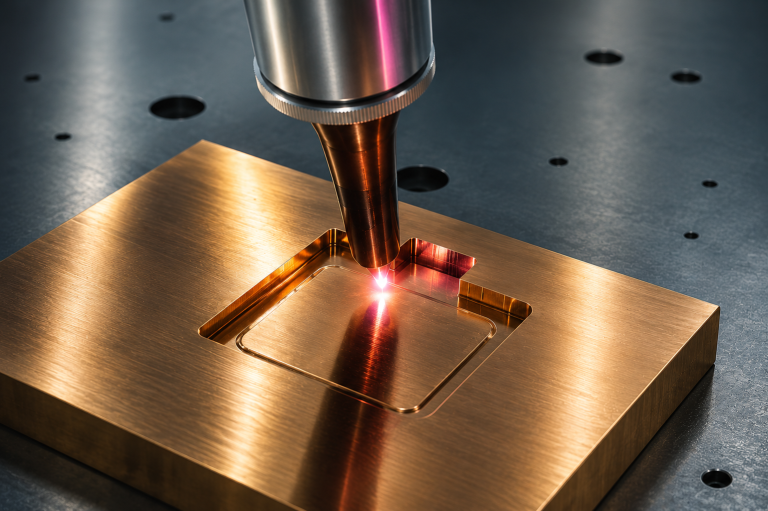
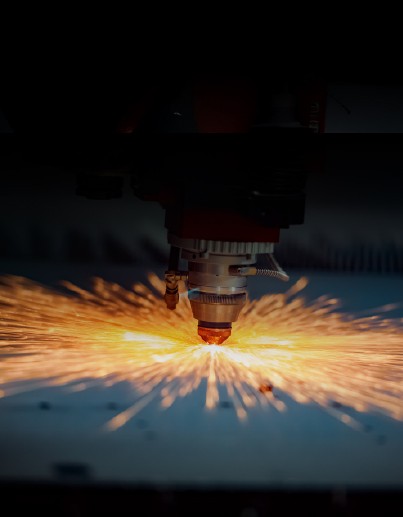
Laser welding has become the preferred solution for stainless steel manifold manufacturing because it combines precision, efficiency, and automation in a single process.
Minimal Heat Input, Minimal Distortion
Laser welding concentrates energy into a very small area, creating an extremely narrow heat-affected zone—typically only one-fifth to one-tenth that of conventional welding processes.
The result is:
Significantly reduced thermal deformation
Excellent dimensional accuracy
Better preservation of base material properties
Less need for corrective processing
This makes laser welding particularly suitable for thin-wall 304 and 316L stainless steel manifolds.
Weld Strength Comparable to the Base Material
A properly optimized laser welding process produces dense, fully penetrated welds with mechanical strength approaching that of the parent material.
The finished welds offer:
Excellent structural strength
Superior corrosion resistance
Outstanding pressure performance
Reliable leak-tight sealing
Combined with 100% airtightness testing, laser welding greatly reduces the risk of coolant leakage throughout the product's lifecycle.
Easily Handles Complex Three-Dimensional Welds
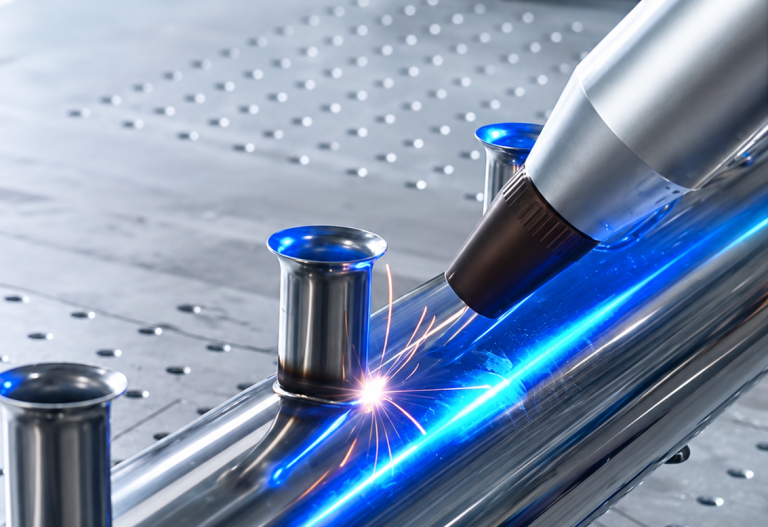
Integrated with multi-axis motion systems or gantry platforms, laser welding can complete a wide variety of complex weld paths with exceptional precision.
Typical applications include:
360° circumferential welds
Saddle-shaped welds
Longitudinal seams
Multi-port connector welding
Irregular manifold geometries
Even difficult welding positions can be completed consistently without sacrificing quality.
Ideal for Automated Manufacturing
Laser welding systems can be seamlessly integrated with intelligent manufacturing equipment, including:
Automatic loading and unloading
Vision-guided positioning
Robotic handling
In-line leak testing
MES and production traceability systems
Compared with conventional welding, manufacturers benefit from:
Higher production efficiency
Lower labor costs
Improved product consistency
Reduced scrap rates
Complete quality traceability
These advantages make laser welding an ideal choice for high-volume manifold production.
Applications Across Modern Thermal Management Systems
Laser welding is now widely used for manufacturing stainless steel manifolds in various industries, including:
EV battery cooling plate manifolds
Energy storage thermal management manifolds
AI server liquid cooling systems
Data center cooling loops
Industrial cooling equipment
Process pipeline distribution modules
Chemical fluid control systems
As liquid cooling technology continues to expand, the demand for reliable, precision laser welding solutions will only continue to grow.
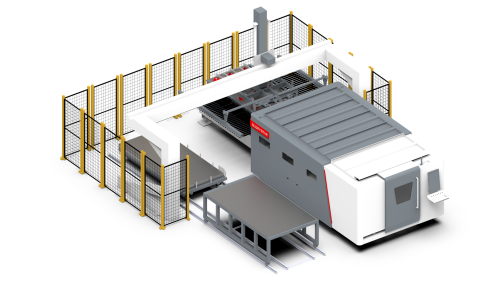
Stainless Steel Manifold Welding Solution: Gantry Laser Welding Machine
A Gantry Laser Welding Machine is specifically designed to meet the demanding requirements of stainless steel manifold production, combining high precision, excellent repeatability, and flexible automation.
Our complete solution includes:
Welding process validation to optimize parameters before production
Custom fixture design for accurate positioning and repeatable quality
Tailor-made welding paths for thin-wall, multi-channel, and complex manifold structures
Flexible integration with existing production lines or standalone automated workstations
Smart manufacturing modules, including vision positioning, automatic loading, leak testing, and production data management for fully automated manufacturing
From prototype validation to high-volume production, a gantry laser welding solution helps manufacturers achieve superior weld quality, higher productivity, and lower manufacturing costs—while meeting the stringent reliability requirements of today's liquid cooling industry.