For manufacturers of liquid cooling components, welding a high-quality manifold is not only about producing a qualified sample but also about maintaining stable quality throughout continuous mass production.
As the markets for data center liquid cooling, energy storage liquid cooling, and new energy vehicle (NEV) thermal management continue to grow, customer demand for higher production capacity and faster delivery is also increasing. Manufacturers are facing a new challenge. The question is no longer whether a manifold can be welded successfully, but whether it can be produced efficiently and consistently in large quantities.
If the welding process relies too heavily on operator experience, product quality can vary from one production batch to another. Even slight differences in welding techniques may affect weld appearance, penetration, and sealing performance. As rework increases, manufacturers not only lose valuable production time but also face higher labor costs, inspection costs, and production management expenses.
A Manifold Laser Welding Machine helps manufacturers improve production consistency by reducing manual intervention and providing a more stable welding process. For companies looking to expand production while maintaining reliable product quality, investing in the right welding equipment has become increasingly important.
Common Challenges in Mass Production
A manifold usually consists of multiple ports, end plates, connectors, and tubes. Since different welding positions require different welding parameters and welding paths, maintaining consistent quality throughout the entire workpiece can be challenging.
During mass production, manufacturers often encounter the following problems:
Different welding results from different operators
Inconsistent weld bead width at connection points
Insufficient weld penetration in certain areas
Excessive heat input in localized sections
Deformation of the workpiece after welding
Significant post-weld grinding and finishing work
Unstable air-tightness testing results
Rework that delays production schedules and customer delivery
Although these problems may appear minor on individual products, they become much more significant when production volumes increase. Even a small increase in the defect rate can lead to considerable material waste, additional labor, and longer delivery times.
For manufacturers in the liquid cooling industry, production consistency directly affects delivery capability and after-sales reliability. Products with inconsistent welding quality are more likely to fail leak testing or require additional repairs, increasing manufacturing costs and reducing overall production efficiency.
This is why more manufacturers are choosing a Manifold Laser Welding Machine to improve process stability and reduce quality variations between production batches.
How Does a Manifold Laser Welding Machine Reduce the Impact of Human Factors?
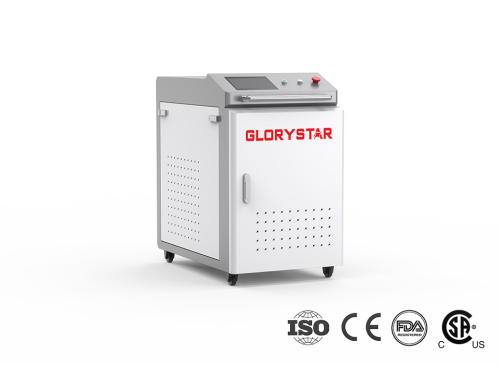
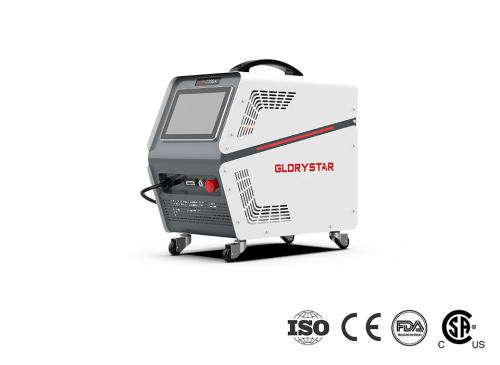
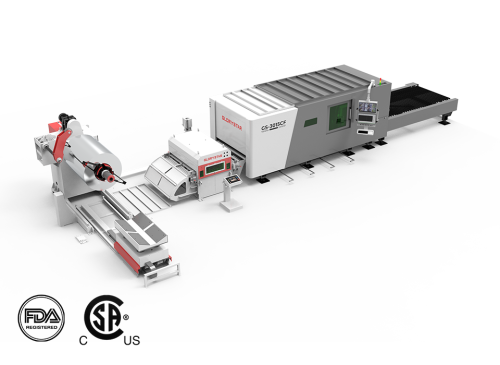
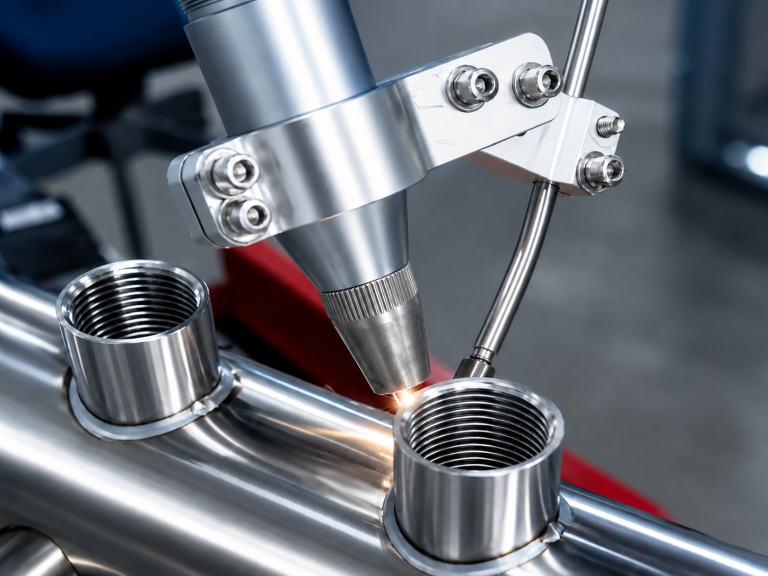
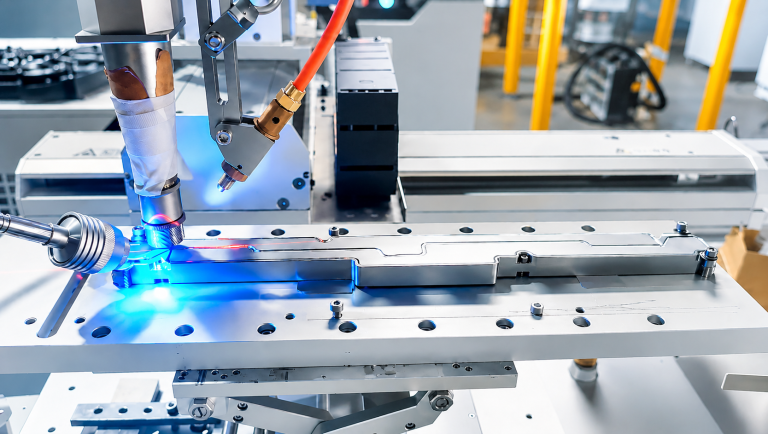
GLORYSTAR's Manifold Laser Welding Machine adopts a precision laser welding process that can be configured according to the structure and welding requirements of different manifold products.
Different manifold designs may vary in material, wall thickness, port quantity, and joint configuration. Based on these differences, appropriate welding parameters and welding paths can be selected to achieve stable and reliable welding results.
By precisely controlling laser power, welding speed, focal position, and welding trajectory, the machine minimizes quality fluctuations caused by differences in operator experience. Once the welding parameters have been verified, the same process can be repeatedly applied throughout batch production, helping manufacturers maintain consistent welding quality from the first workpiece to the last.
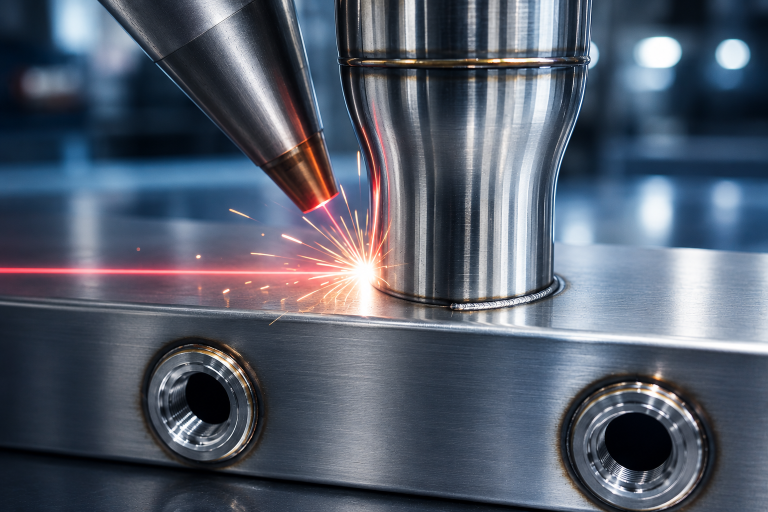
Compared with traditional welding methods, laser welding produces a relatively small heat-affected zone. This helps reduce the risk of deformation around ports and housings while maintaining better dimensional accuracy after welding. As a result, weld seams are smoother and more uniform, reducing the amount of secondary grinding and manual finishing required before the next production step.
For manifold products with multiple ports, complex angles, and complicated structures, proper process matching also helps improve weld continuity and penetration consistency. This reduces the risk of missed welds, incomplete fusion, burn-through, and other welding defects that may affect sealing performance.
By reducing dependence on manual skills, a Manifold Laser Welding Machine enables manufacturers to establish a more standardized and repeatable production process. This is particularly valuable for companies that need to produce large quantities of manifolds while maintaining consistent product quality.
Production Efficiency Is More Than Welding Speed
When evaluating welding equipment, manufacturers should not focus only on the welding time of a single workpiece. Overall production efficiency should also take into account factors such as the rework rate, scrap rate, post-weld grinding time, inspection pass rate, and delivery schedule.
If a machine offers fast welding speeds but requires frequent repairs, additional grinding, or repeated leak testing afterward, its overall production efficiency may not be as high as expected. In other words, a shorter welding cycle does not necessarily result in lower manufacturing costs.
A stable Manifold Laser Welding Machine helps manufacturers improve the entire production process rather than simply increasing welding speed. By reducing quality fluctuations and minimizing manual intervention, manufacturers can achieve more consistent production results while lowering operating costs.
The advantages of a stable welding process include:
Reduced secondary grinding and finishing
Lower rework and scrap rates
Higher air-tightness test pass rates
Reduced dependence on manual skills
Better batch-to-batch consistency
Shorter production cycles
Stronger order delivery capability
Lower after-sales risks
These improvements contribute directly to higher production efficiency and better product quality. For manufacturers handling large production volumes, reducing rework and maintaining stable quality are often more valuable than saving only a few seconds during the welding process.
Therefore, when selecting production equipment, manufacturers should evaluate the complete manufacturing process instead of considering welding speed alone. A reliable Manifold Laser Welding Machine can help improve production efficiency while supporting stable long-term manufacturing.
Which Companies Should Consider a Manifold Laser Welding Machine?
A Manifold Laser Welding Machine is suitable for a wide range of liquid cooling applications, including:
Data center liquid cooling systems
Server cooling systems
Energy storage liquid cooling systems
New energy vehicle (NEV) thermal management systems
Battery pack liquid cooling systems
Industrial equipment cooling systems
Precision metal fluid distribution components
Although these applications all use manifolds, product designs can vary considerably. Different manufacturers may have different requirements for materials, dimensions, wall thicknesses, port configurations, and production capacity.
Because of these differences, selecting the right welding solution requires more than simply choosing a standard machine. Manufacturers should consider whether the equipment can match their actual production requirements and provide stable welding performance for their specific products.
GLORYSTAR provides sample welding, process testing, and customized equipment solutions based on customers' workpieces and production needs. Through welding verification before production, customers can evaluate weld quality, optimize welding parameters, and select a solution that best fits their manufacturing process.
This approach helps manufacturers reduce implementation risks while improving production efficiency and product consistency.
Conclusion
For manufacturers of liquid cooling components, improving mass production efficiency is not simply about welding faster. It also requires stable welding quality, consistent production performance, lower rework rates, and reliable delivery capability.
A Manifold Laser Welding Machine helps reduce the influence of manual operation by providing precise control of welding parameters and repeatable welding processes. It also helps minimize deformation, improve weld consistency, reduce secondary processing, and increase air-tightness inspection pass rates.
As customer demand for liquid cooling products continues to grow, manufacturers need equipment that can support both product quality and large-scale production. Choosing the right Manifold Laser Welding Machine can help improve product yield, reduce manufacturing costs, and strengthen a company's ability to deliver high-quality products efficiently and consistently.